A third grader hears the word enormous in a song on Monday, uses it to describe a pumpkin on Tuesday, and spells it right on Friday. That is what vocabulary teaching looks like when it works: a new word shows up more than once, in more than one form, and a child gets to use it before it is tested. The hard part is giving every word that many chances without turning your week into a worksheet factory.
The tools on this list cover the different ways teachers do that work. Some teach words through music and video, some through games and flashcards, one is a leveled dictionary with ready-made word lists, and one is a print program with a set lesson sequence. A few are free, most are paid, and two are built for teachers who want to use their own word list.
How we picked: we checked each tool's official website on November 1, 2026 and only describe features and plans we could see there. We weighted fit for kindergarten through 5th grade classrooms, whether the vocabulary content is easy to find inside the tool, and whether a teacher can start for free. Where a detail comes from another page on the same official site, the guide says so.
Key takeaways
- Best free option for vocabulary tutoring: LearnThatWord, a nonprofit with free tutoring for registered users.
- Vocabulary A-Z is the only option here built around your own word lists, with games, quizzes, and auto-generated lessons.
- Flocabulary teaches words through hip-hop songs and videos, with a vocabulary program for grades K–8.
- Wordly Wise 3000 is the most structured choice: a print program with direct instruction, practice, and tests.
- Wordsmyth pairs leveled dictionaries with ready-made word lists for grades K–2, 3–5, and 6–8.
Quick comparison
| # | Tool | Best for | Grades / audience | Pricing | Free plan |
|---|---|---|---|---|---|
| 1 | your own word lists with games and lessons | Grades K–5 | Paid | Trial only | |
| 2 | teaching words through songs and video | Grades K–8 (vocabulary) | Paid | No | |
| 3 | a leveled dictionary with ready-made word lists | Grades K–8 | Paid | unverified | |
| 4 | fast flashcard review of any word list | All grades | Freemium | Free for teachers | |
| 5 | free one-to-one vocabulary tutoring | Elementary and up | Freemium | Free (nonprofit) | |
| 6 | a structured year-long vocabulary program | Grades K–12 | Paid | No | |
| 7 | a free vocabulary game app | Upper elementary and up | Free + paid | Yes | |
| 8 | screen-free vocabulary books and games | Ages 3–14 | Paid | No |
Make a tool for teachers?
Built something teachers love? We keep these guides fresh, so send us a new tool, updated pricing or a featured spot request.
Request a listingThe 8 best picks
- Pricing
- Paid
- Free plan
- Trial only
- Grades / audience
- Grades K–5
Vocabulary A-Z is built for direct vocabulary instruction in kindergarten through 5th grade. Teachers pick from ready-made word lists or enter their own, and the tool turns each list into games, quizzes, and a week's worth of practice activities. Students play in a student portal, and parents can follow along through a parent portal.
What we like
- Pre-made and custom word lists that auto-create lessons, games, and quizzes
- Game-based activities for spelling, vocabulary, and phonics
- A week's worth of practice activities for every custom list
- Student portal with rewards, plus a parent portal
Watch out for
- No price is listed on the site, so request a quote for your classroom.
- It was formerly VocabularySpellingCity, so older bookmarks and training materials may use the old name.
Pricing: A free trial is available; subscriptions are sold per classroom for up to 36 students.
- Pricing
- Paid
- Free plan
- No
- Grades / audience
- Grades K–8 (vocabulary)
Flocabulary teaches academic vocabulary through hip-hop songs and videos, with a vocabulary program for grades K–8 called the Word Up Project. Each lesson pairs a song with activities that practice the words, and students can also write their own rhymes. Teachers can browse lessons by subject and use the videos to introduce, review, or test vocabulary.
What we like
- Hip-hop songs and videos that teach academic vocabulary
- The Word Up Project, a vocabulary program for grades K–8
- Five activities per lesson: Vocab Cards, Vocab Game, Read and Respond, Quiz, and Lyric Lab
- Lessons you can browse by subject, with class login for students
Watch out for
- The homepage did not load when we checked on November 1, 2026, so details come from the official 'What is Flocabulary?' page and help center.
- The individual teacher plan is the Lite plan, with fewer features than the school and district plans.
Pricing: Paid plans are available for individual teachers and for schools and districts.
- Pricing
- Paid
- Free plan
- unverified
- Grades / audience
- Grades K–8
Wordsmyth is a dictionary and vocabulary center with three levels of definitions, so students can look up the same word at a level that matches their reading. Its children's dictionaries cover kindergarten through 8th grade, including an illustrated learner's dictionary for K–2 with full audio support. Teachers can build word lists, turn them into lessons, and track student progress.
What we like
- Leveled dictionaries: Beginner's, Intermediate, and Advanced, plus a children's suite
- An illustrated learner's dictionary for K–2 with full audio support
- Ready-made word lists for grades K–2, 3–5, and 6–8
- Wordlist Maker that builds a list from your own words or from any text
Watch out for
- No prices are shown on the site, so ask for a quote before budgeting.
- The full vocabulary activities and teacher tools need a subscription.
Pricing: Individual and educational group subscriptions are available; the site does not list a free plan.
- Pricing
- Freemium
- Free plan
- Free for teachers
- Grades / audience
- All grades
Quizlet turns any word list into flashcards, practice tests, and games. Teachers can type in their own words or turn notes into study sets, then assign them to a class and track who has practiced. It works with Google Classroom, so a set can be assigned in seconds.
What we like
- Flashcards, practice tests, and games built from your own word lists
- Notes that turn into study guides, flashcards, and practice tests
- Free teacher accounts with classes and Google Classroom integration
- Study modes that students can use at home or in class
Watch out for
- The free plan shows ads while students study.
- It is a general study tool, not a vocabulary curriculum, so it will not pick the words for you.
Pricing: Free for teachers; paid Plus plans add extra features.
- Pricing
- Freemium
- Free plan
- Free (nonprofit)
- Grades / audience
- Elementary and up
LearnThatWord is a nonprofit vocabulary program that tutors each student on the words they need most. Every session is built around the learner, and the program keeps track of words already known so practice time goes to the ones that still need work. Each word comes with audio, images, usage examples, and translations, and a built-in dictionary explains the word in context.
What we like
- Free vocabulary tutoring for registered users, with sessions built around each learner
- A multimedia dictionary with audio, images, usage examples, and translations
- A personal coach that plans the next words to review
- Free tutoring for 2nd and 3rd grade classrooms through the Vocabulary Junction campaign
Watch out for
- The site is built for individual learners first, so class setup takes a few extra steps.
- Word lists are personal to each learner, which suits tutoring better than whole-class drills.
Pricing: Vocabulary tutoring is free for registered users; premium features are available as a paid upgrade.
- Pricing
- Paid
- Free plan
- No
- Grades / audience
- Grades K–12
Wordly Wise 3000 is a print program that teaches academic vocabulary through direct instruction. Each lesson starts with a word list that gives dictionary-style definitions and sentences showing each word in context. Students then work through practice activities, talk about the words with classmates, and apply them in writing, with tests at the end of each lesson.
What we like
- Word lists with definitions and sentences that show each word in context
- Practice activities for word parts such as prefixes, roots, and suffixes
- Reading passages at two levels so the same lesson works for more readers
- Teacher resource books with lesson reviews, reproducible tests, and answer keys
Watch out for
- This is a print program, not an app, so budget for student books as well as teacher books.
- The program covers kindergarten through 12th grade, so pick the book that matches your grade.
Pricing: Sold as print student books and teacher resource books; free sample lessons are available on the EPS Learning site.
- Pricing
- Free + paid
- Free plan
- Yes
- Grades / audience
- Upper elementary and up
Vocab Victor is a free app that teaches intermediate vocabulary through five games. Each game practices a different kind of word knowledge: matching words by meaning, finding words in a puzzle, sorting words by how they relate, and picking the word that fits a definition. The app adapts to the player's level and repeats each word in different games until it is learned.
What we like
- Five games that each teach a different kind of word knowledge
- Word lists built by linguists, from beginner to intermediate levels
- A Word Review screen that shows definitions right after each game
- A Progress Room where learners can see the words they have learned
Watch out for
- The teacher page for tracking student progress is still being rolled out.
- Word lists beyond the starter set are in-app purchases, so check device purchase settings first.
Pricing: Free to download on Apple and Android devices; extra word lists can be bought inside the app.
- Pricing
- Paid
- Free plan
- No
- Grades / audience
- Ages 3–14
Mrs Wordsmith makes illustrated vocabulary books and card games for children aged 3 to 14. The products are organized by age, from early word bundles for ages 3–6 up to storytelling games for ages 10–14. A word-a-day book turns new words into a short daily habit, and the card games practice vocabulary through play rather than drills.
What we like
- Illustrated books and card games organized by age, from 3–6 up to 10–14
- A word-a-day book that makes new words a short daily habit
- Card games that practice vocabulary through play
- Products built with educators and language experts
Watch out for
- There is no free plan or free trial on the site.
- The site is aimed at families, so classroom sets are not listed separately.
Pricing: Products are sold individually; the word-a-day book is listed at $14, and card games at $29.99–$32.99.
How we chose
We started from tools PreK–6 teachers actually use and checked every one against its official website, pricing page and feature pages on November 5, 2026. We kept tools that fit elementary classrooms, noted whether a free plan exists, and wrote down honest limitations next to the strengths. Nobody paid to be included, and we don't use affiliate links on this page.
- Fit for PreK–6 classrooms, special education or homeschool
- Clear information on the official site about what the tool does and who it is for
- Free plan or free-for-teachers option noted where one exists
- Still active and maintained, with rebrands noted
How to choose the right tool
Match the tool to how you teach words. If you build your own weekly list, Vocabulary A-Z or Wordsmyth will take it. If you want words to arrive through music, Flocabulary fits a short daily routine. If you want a set program with tests, Wordly Wise 3000 gives you the sequence.
Check the free path before you recommend anything to families. LearnThatWord tutoring is free, Vocab Victor is free to download, and Quizlet is free for teachers. A paid tool with a free trial, such as Vocabulary A-Z, is easier to try than one with no free version at all.
Decide whether the tool should pick the words or you should. A program with a set list saves planning time, but it may teach words your class does not need. A tool that takes your own list follows your reading series and your science and social studies units.
Plan for print versus digital. A print program needs books for every student and a shelf to store them, while an app needs devices and logins. A book or card game needs neither, which makes it the simplest option for a center or a take-home bag.
Watch how a child meets a new word. A good vocabulary tool shows the definition, says the word, uses it in a sentence, and brings it back later. If a tool only flashes the word and marks answers right or wrong, it is testing memory rather than teaching it.
Best pick by situation
- You want a free vocabulary routine you can start tomorrow: LearnThatWord — free tutoring with a personal coach for every student
- You teach K–2 and need a picture dictionary: Wordsmyth — illustrated learner's dictionary with full audio support
- You want students to learn words through music: Flocabulary — hip-hop songs with Vocab Cards, Vocab Game, and Lyric Lab
- You want to drill your own weekly word list: Vocabulary A-Z — custom lists with games, quizzes, and auto-generated lessons
- You need a structured vocabulary program for the whole year: Wordly Wise 3000 — direct instruction with word lists, practice, and tests
- You want quick flashcard review before a test: Quizlet — flashcards, practice tests, and games from your own lists
- You need a screen-free vocabulary option: Mrs Wordsmith — books and card games for ages 3–14
Pair it with printables
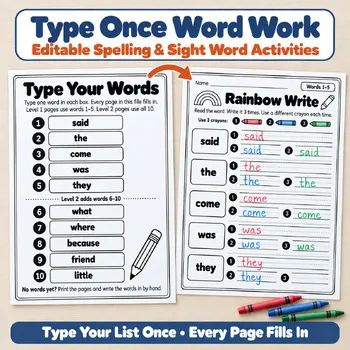
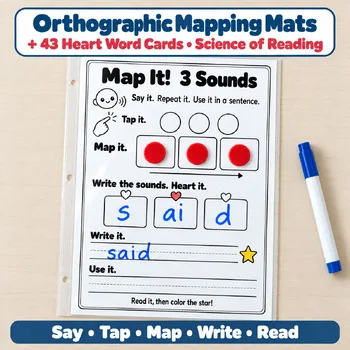
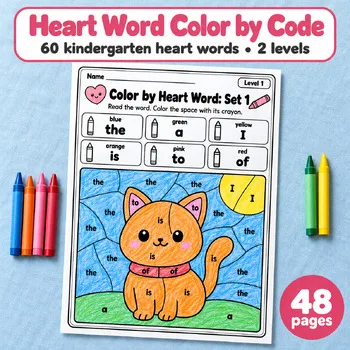
When you want hands-on word practice away from the screen, these Activity Express printables pair well with any of the tools above.
Frequently asked questions
What is the best free vocabulary app for elementary students?
LearnThatWord is the strongest free starting point: vocabulary tutoring is free for registered users, and its free campaign covers 2nd and 3rd grade classrooms. Vocab Victor is also free to download, and Quizlet is free for teachers.
Can I use my own vocabulary list with these tools?
Yes. Vocabulary A-Z is built around pre-made and custom word lists, Wordsmyth has a Wordlist Maker that builds lists from your words or from any text, and Quizlet turns any list you type in into flashcards, practice tests, and games.
Which vocabulary tool works without a screen?
Wordly Wise 3000 is a print program with student books and teacher resource books, and Mrs Wordsmith sells illustrated books and card games. Both work with no devices at all.
Which vocabulary tool is best for kindergarten?
Wordsmyth has an illustrated learner's dictionary for K–2 with full audio support, Mrs Wordsmith has word bundles for ages 3–6, and Flocabulary's Word Up vocabulary program starts in kindergarten.
Do any of these tools work well for English learners?
Yes. Vocab Victor is built for English learners and adapts to each player's level, LearnThatWord gives translations for words in many languages, and Wordsmyth offers Spanish and Chinese support in its Intermediate dictionary.
Make a tool for teachers?
Built something teachers love? We keep these guides fresh, so send us a new tool, updated pricing or a featured spot request.
Request a listingDisclosure: no tool on this page paid to be included and we don't earn commissions from these links. Featured placements, if we ever offer them, will be clearly labeled "Sponsored". Details were checked on each provider's official website on November 5, 2026 and can change.