It is ten in the morning and the class is outside, phones in hand, staring at a leaf. One student wants to know what tree it fell from. Another has spotted a bird and wants its name. A third has found a bug and wants to know whether it bites. That is the whole of outdoor learning in one minute: curiosity, a question, and a living thing that will not wait for the textbook.
The eight tools below answer those questions in the moment. Two identify plants and animals from a photo. One names the bird singing overhead. Two turn the class into working scientists, tracking migrations and seasons for real researchers. One builds a school garden from the first seed. One is a full environmental curriculum built around trees. One is a library of 401 free wildlife lessons. All eight were checked on their own official sites on November 5, 2026, and six of the eight are completely free; a seventh, Project Learning Tree, has free resources to start with.
We picked tools that fit PreK–6 classrooms and homeschool families: free apps that work on a phone in the schoolyard, small nonprofit programs run by people who answer their email, and two big names — the Cornell Lab and WWF — for when you want depth. No tool here was paid to appear, and every one of them has something a teacher can use outside this week.
Key takeaways
- Best free starting point: Seek by iNaturalist — identify plants, animals and fungi with a camera, no account needed.
- Merlin Bird ID names birds by sound or photo, and its Sound ID and Photo ID work completely offline.
- Journey North and Nature's Notebook turn the class into working scientists, tracking migrations and seasons for real researchers.
- Project Learning Tree is the only full curriculum here: forest and environment activities from preschool to grade 12, with free samples.
- WWF Wild Classroom is the biggest free library: 401 activities and educator guides, filterable by grade.
Quick comparison
| # | Tool | Best for | Grades / audience | Pricing | Free plan |
|---|---|---|---|---|---|
| 1 | identifying plants and animals outside | All ages | Free | Yes | |
| 2 | identifying birds by sound or photo | All ages | Free | Yes | |
| 3 | forest and environment lesson plans | PreK–12 | Free + paid | Yes | |
| 4 | starting a school garden | All ages | Free | Yes | |
| 5 | tracking migrations with your class | All ages | Free | Yes | |
| 6 | recording seasons as a class | Kindergarten and up | Free | Yes | |
| 7 | identifying wild plants by photo | All ages | Free | Yes | |
| 8 | wildlife lessons with ready guides | Grades K–12 | Free | Yes |
Make a tool for teachers?
Built something teachers love? We keep these guides fresh, so send us a new tool, updated pricing or a featured spot request.
Request a listingThe 8 best picks
- Pricing
- Free
- Free plan
- Yes
- Grades / audience
- All ages
Seek is a free nature identification app from iNaturalist. Point the camera at a plant, animal or fungus and Seek names it, drawing on millions of wildlife observations submitted to iNaturalist. Students earn badges for observing different types of species and can join monthly observation challenges. It is built to be kid-safe: no registration is involved, no user data is collected, and the location is obscured so a precise position is never stored or sent.
What we like
- Point the Seek Camera at a plant, animal or fungus to identify it on the spot
- Earn badges for observing different types of species and joining monthly challenges
- Species lists for your area drawn from millions of iNaturalist observations
- No registration and no user data collected, and your location is obscured to protect privacy
Watch out for
- It is an app, not a website, so you need a mobile device with a camera
- Photo identification can be wrong on lookalike species, so treat the first answer as a starting point
Pricing: Free — the app costs nothing and needs no account.
- Pricing
- Free
- Free plan
- Yes
- Grades / audience
- All ages
Merlin Bird ID is a free bird guide from the Cornell Lab of Ornithology, and it works anywhere in the world. Sound ID listens to the birds around you and shows real-time suggestions for who is singing. Photo ID names a bird from a snapshot, and a step-by-step ID gives matches from three simple questions about size, colour and behaviour. Both Sound ID and Photo ID work completely offline, and the app keeps a life list of every bird the class identifies.
What we like
- Sound ID listens to the birds around you and shows real-time suggestions for who is singing
- Photo ID names a bird from a photo or from your camera roll
- Step-by-step ID gives a list of possible matches from three simple questions
- Explore birds near you with eBird data, and keep a life list of the birds you identify
Watch out for
- Sound ID needs the microphone on and works best where birds are actually singing
- The app is bird-only — it will not identify plants or other animals
Pricing: Free — the full app costs nothing.
- Pricing
- Free + paid
- Free plan
- Yes
- Grades / audience
- PreK–12
Project Learning Tree is an environmental education program for teachers, parents and community leaders working with young people from preschool through grade 12. Its activities teach through the lens of trees and forests, and the newest collection, Connecting for Health and Planet, invites students aged 8–11 to investigate how being outside benefits people. The program has been running for 50 years, and the site offers free resources and sample lesson plans alongside the paid activity guides.
What we like
- Activities for preschool through grade 12 built around trees and forests
- Free resources and sample lesson plans that change regularly
- Family activities to download for home learning
- New activity collections such as Connecting for Health and Planet for grades 3–5
Watch out for
- Full guides are paid, so budget for the guide or a workshop
- Some resources need a free registration to download
Pricing: Free sample lessons and resources; the PreK–8 Activity Guide costs $19.99–$34.99 and e-units $24.99–$39.99 in the PLT shop.
- Pricing
- Free
- Free plan
- Yes
- Grades / audience
- All ages
KidsGardening supports the educators and caregivers bringing gardening to kids. The site offers hands-on lessons for all ages, plus grant funding for school gardens — recent rounds include the Waterwise Garden Grant and the Plant it! Grant — and a free monthly newsletter with gardening ideas. It is the place to start when a class wants a garden of its own, whether that is a full bed or a few pots on a windowsill.
What we like
- Hands-on garden lessons for educators and families, for all ages
- Grants for school gardens, including the Waterwise Garden Grant and the Plant it! Grant
- A free monthly newsletter with gardening ideas for kids
- Lesson ideas for all ages, from preschool up
Watch out for
- Grants open and close on set dates, so check the current round
- Most useful once you have somewhere to plant, even a windowsill
Pricing: Free to use, with grants for school gardens; the newsletter is free too.
- Pricing
- Free
- Free plan
- Yes
- Grades / audience
- All ages
Journey North is a free citizen-science program that has tracked migrations and seasons since 1994. Students report sightings of monarch butterflies, hummingbirds and other migratory species, then watch the migration advance on live maps. The site also runs tulip test gardens and publishes FAQs and resources for each project, including the monarch life cycle. A class that reports in spring can watch its own sightings appear on the map.
What we like
- Report sightings of monarch butterflies, hummingbirds and other migratory species
- Live maps showing where migrations have reached
- Tulip test gardens with planting instructions
- Project FAQs and resources, including monarch life-cycle pages
Watch out for
- Sightings must go through the report form, not email
- Migration timing varies by year and place, so check the maps before promising a sighting
Pricing: Free — report sightings, explore maps and use the resources at no cost; the program runs on donations.
- Pricing
- Free
- Free plan
- Yes
- Grades / audience
- Kindergarten and up
Nature's Notebook is the USA National Phenology Network's program for tracking the timing of plant and animal seasonal activity — when leaves open, flowers bloom and animals appear. Students observe a spot near school and record what they see, and those observations feed research on how seasons are shifting. The site runs data collection campaigns such as Green Wave, Nectar Connectors and Quercus Quest, and offers phenology lesson plans from kindergarten to post-secondary.
What we like
- Record seasonal changes in plants and animals near your school
- Join data collection campaigns such as Green Wave, Nectar Connectors and Quercus Quest
- Phenology lesson plans from kindergarten to post-secondary
- Your class observations feed research on how seasons are shifting
Watch out for
- Needs a regular observing spot, such as a schoolyard tree
- Younger students need the lesson plans to know what to look for
Pricing: Free — joining and observing cost nothing.
- Pricing
- Free
- Free plan
- Yes
- Grades / audience
- All ages
Pl@ntNet is a free plant identification app and website built by a research community. Photograph a plant and the AI suggests what it is, drawing on a database of more than 70,000 illustrated species. The site is organised into regional and thematic floras, so a class can explore the plants of its own area, and every observation joins a community that contributes to science. It also identifies plant diseases and pests, and the apps are on Google Play and the App Store.
What we like
- Identify plants from a photo, with suggestions from AI
- More than 70,000 illustrated species with pages on distribution and phenology
- Regional and thematic floras to explore plants by place
- A community that shares observations and contributes to science
Watch out for
- AI suggestions can be wrong on lookalikes, so confirm with a second source
- The full database is huge, so start from your regional flora rather than a blank search
Pricing: Free — identify plants and browse floras at no cost.
- Pricing
- Free
- Free plan
- Yes
- Grades / audience
- Grades K–12
WWF Wild Classroom is WWF's free library of wildlife learning activities for educators. It holds 401 activities that filter by grade, subject and format, with educator resource guides for species such as tigers, sea turtles, elephants and polar bears, plus toolkits, species cards and classroom presentations. The Green Club guides help older students run environmental clubs, and Greenprints for the Future offers funding for student-led projects.
What we like
- 401 free learning activities, filterable by grade, subject and format
- Educator resource guides for tigers, sea turtles, elephants, polar bears and more
- Toolkits, species cards and classroom presentations ready to use
- Green Club guides and project funding through Greenprints for the Future
Watch out for
- Most guides are built around one species, so check the grade filter first
- The project fund has an application deadline, so check the current round
Pricing: Free — all activities and educator guides cost nothing.
How we chose
We started from tools PreK–6 teachers actually use and checked every one against its official website, pricing page and feature pages on November 5, 2026. We kept tools that fit elementary classrooms, noted whether a free plan exists, and wrote down honest limitations next to the strengths. Nobody paid to be included, and we don't use affiliate links on this page.
- Fit for PreK–6 classrooms, special education or homeschool
- Clear information on the official site about what the tool does and who it is for
- Free plan or free-for-teachers option noted where one exists
- Still active and maintained, with rebrands noted
How to choose the right tool
Start with the outing, not the app. A walk that ends with one identified plant, bird or bug beats a morning of screen time. Pick the tool that fits the walk you can actually take: Seek or Pl@ntNet for a nature trail, Merlin for the schoolyard at dawn, Journey North for a spring migration watch.
Match the tool to the question. “What is this plant?” wants Seek or Pl@ntNet. “What bird is singing?” wants Merlin. “How do the seasons change?” wants Nature's Notebook or Journey North. “What do we do with a garden?” wants KidsGardening.
Check the age fit. Nature's Notebook has lesson plans from kindergarten up, and Project Learning Tree runs from preschool to grade 12. The identification apps work for all ages, but younger students need a teacher holding the phone.
Try the free tools before spending anything. Six of these eight tools are completely free, and Project Learning Tree has free resources to start with. Use the free ID apps and the WWF guides for a term before buying a PLT activity guide.
Make it a routine, not a one-off. The citizen-science tools only pay off when the class observes the same place week after week. Pick one — Journey North or Nature's Notebook — and stick with it for a season.
End every outing with making. A walk becomes a lesson when students draw, write about or build what they found. The printables in the box below are made for that step.
Best pick by situation
- You want students to identify what they find outside: Seek by iNaturalist — camera ID for plants, animals and fungi, no account needed
- Your class hears birds but cannot name them: Merlin Bird ID — Sound ID names the singer in real time
- You need forest lessons for a whole term: Project Learning Tree — activity guides from preschool to grade 12
- You are starting a school garden: KidsGardening — lessons, grants and a free newsletter
- You want to follow monarch migration in spring: Journey North — live maps and sighting reports
- You want students to record the seasons: Nature's Notebook — phenology observations that feed real research
- You want wildlife lessons ready to teach: WWF Wild Classroom — 401 free activities with educator guides
Pair it with printables
These printables from our store pair with the tools above — a bat unit, a pumpkin life-cycle craft, an apple investigation and an animal-adaptations project that take outdoor learning onto paper.
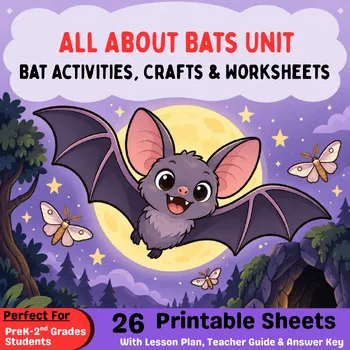 All About Bats UnitPreK, Kindergarten, 1st grade, 2nd grade$4.49 · 26 pages
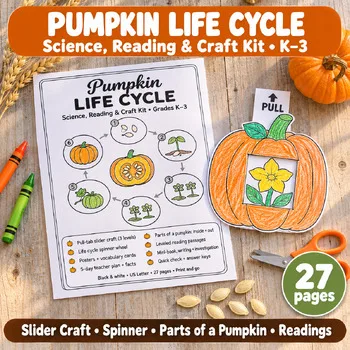 Pumpkin Life Cycle CraftKindergarten, 1st, 2nd, 3rd grade$3.25 · 27 pages
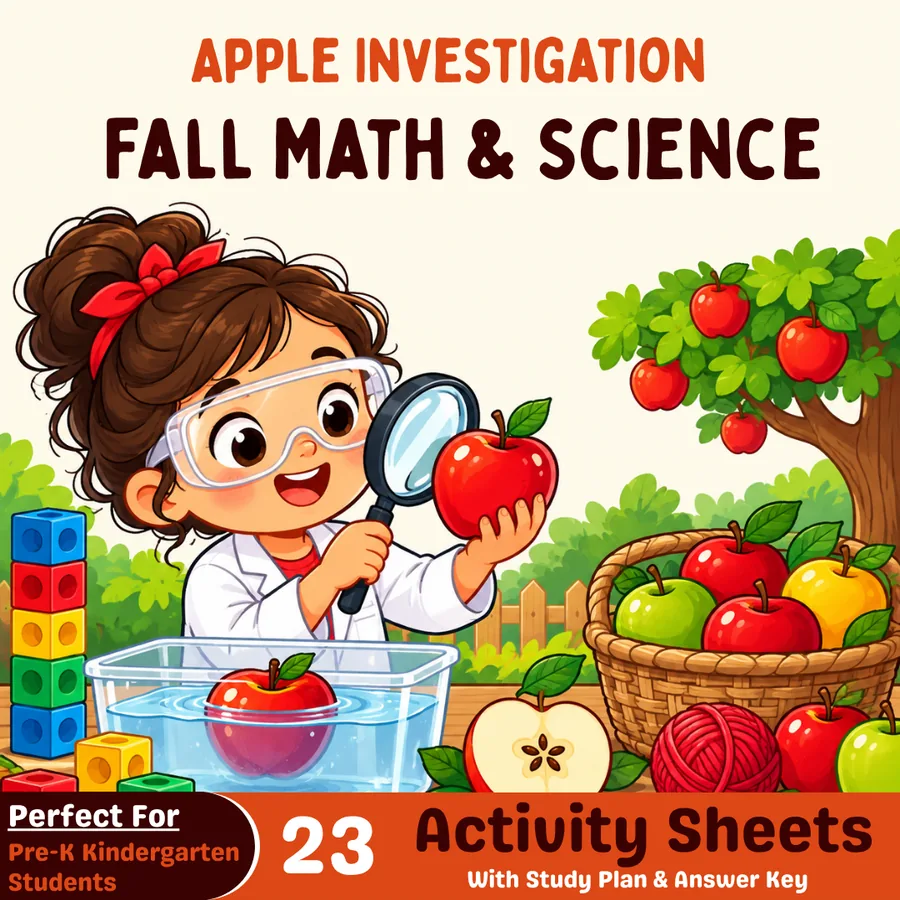 Apple Investigation LabPreschool, Pre-K, TK, Kindergarten$3.25 · 23 pages
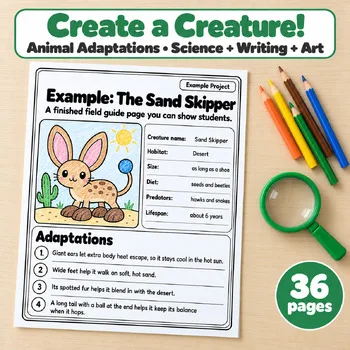 Creature Lab Adaptations Project3rd grade, 4th grade, 5th grade$4.49 · 36 pages
Frequently asked questions
What is the best free nature app for elementary students?
Seek by iNaturalist is the best place to start: it costs nothing, needs no account and collects no user data, and students earn badges for identifying plants, animals and fungi. Add Merlin Bird ID for birds and Pl@ntNet for plants when the class wants to go deeper.
Can I use these tools without student accounts?
Yes, for most of them. Seek needs no registration at all, and Merlin, Pl@ntNet, Journey North maps and the WWF Wild Classroom guides need no student account. Nature's Notebook asks observers to join before submitting data, so the teacher holds the account and the class observes together.
Which tool is best for a school garden?
KidsGardening, which is built for exactly that: hands-on garden lessons for educators and families, grants for school gardens and a free monthly newsletter. Pair it with Project Learning Tree when you want forest and environment lessons alongside the garden.
Do any of these tools work offline?
Merlin Bird ID does: its Sound ID and Photo ID both work completely offline, so you can identify birds on a trail with no signal. The other identification tools need a connection to match a photo, so download Merlin's bird packs before you leave the building.
Which tools let students do real science?
Journey North and Nature's Notebook. In Journey North the class reports monarch and hummingbird sightings that show up on live migration maps. In Nature's Notebook the class records seasonal changes in plants and animals, and those observations feed research on how seasons are shifting. Pl@ntNet observations also feed a shared science database.
Make a tool for teachers?
Built something teachers love? We keep these guides fresh, so send us a new tool, updated pricing or a featured spot request.
Request a listingDisclosure: no tool on this page paid to be included and we don't earn commissions from these links. Featured placements, if we ever offer them, will be clearly labeled "Sponsored". Details were checked on each provider's official website on November 5, 2026 and can change.