Elementary science often gets squeezed into the last 30 minutes of the day, and many K-5 teachers are expected to teach it without a full curriculum or a stocked supply closet. A strong video and lesson platform fills that gap: a short video to introduce a phenomenon, a ready-made investigation, and a quick check for understanding. This list is for K-5 classroom teachers, science specialists and homeschool families deciding where to spend their limited time and budget.
We checked each platform on its official website this week, including pricing pages where they exist. We noted which ones are free, which offer only a trial, and which are sold mainly to schools, and we left out claims we could not confirm. One popular site we looked at, Wonderopolis, now redirects to a closure notice, so it is not included.
The list mixes full lesson programs with free video sources you can drop into any unit.
Key takeaways
- Best open-and-go K-5 lessons: Mystery Science (school and homeschool memberships, plus limited free classroom scholarships through June 30, 2027)
- Best short videos with full lesson materials: Generation Genius (Science Only plan listed at $250 a year)
- Best free PreK-12 library with Google Classroom sharing: PBS LearningMedia
- Best for K-3 animated topics: BrainPOP Jr.
- Best free space and Earth science site: NASA Space Place, in English and Spanish
Quick comparison
| # | Tool | Best for | Grades / audience | Pricing | Free plan |
|---|---|---|---|---|---|
| 1 | open-and-go, phenomenon-based K-5 science lessons | K-5 | School license | Trial only | |
| 2 | short science videos with complete lesson kits | K-8 science and math; K-5 ELA | Paid | Trial only | |
| 3 | free standards-aligned science videos and interactives | PreK-12 | Free | Yes | |
| 4 | animated K-3 topics with leveled quizzes | K-3 | Paid | Trial only | |
| 5 | printable science readers and hands-on experiments | K-6 | Paid | Trial only | |
| 6 | space and Earth science games and crafts | Upper elementary, with parent and teacher resources | Free | unverified | |
| 7 | human-curated science videos that spark questions | All ages (curated for families and teachers) | Free | Yes | |
| 8 | science fair projects and STEM activities | K-12 | Free + paid | Free (nonprofit) | |
| 9 | standards-aligned science games for practice | K-8 (Awakening K-9) | Freemium | Yes |
Make a tool for teachers?
Built something teachers love? We keep these guides fresh, so send us a new tool, updated pricing or a featured spot request.
Request a listingThe 9 best picks
Mystery Science
Best for: open-and-go, phenomenon-based K-5 science lessons
- Pricing
- School license
- Free plan
- Trial only
- Grades / audience
- K-5
Mystery Science is a standards-aligned K-5 science curriculum organized into lesson sets by grade and topic, such as Animal Needs in kindergarten or Energy and Energy Transfer in 4th grade. A teacher opens a lesson, plays the prepared hook and visuals, and then leads a hands-on investigation, which makes it a practical choice for classrooms without a science specialist.
What we like
- Open-and-go lessons with the hook, visuals and activity already prepared
- Phenomenon-driven investigations organized by grade and topic
- Written and 3D assessments
- Standards-alignment guides for every state, including NGSS
Watch out for
- Classroom Scholarships cover one homeroom teacher and are limited per school
- Exact school pricing appears only after you enter your school's information
Pricing: Sold through school or district memberships (Science Only listed at $2,199, with exact pricing after you enter your school) and a homeschool plan at $199; eligible teachers can apply for a free Classroom Scholarship through June 30, 2027.
Generation Genius
Best for: short science videos with complete lesson kits
- Pricing
- Paid
- Free plan
- Trial only
- Grades / audience
- K-8 science and math; K-5 ELA
Generation Genius, a Newsela company, makes science and math video lessons of about 12 minutes each, made in partnership with the National Science Teachers Association. Teachers typically show the video to launch a lesson, then use the matching DIY activity, discussion questions and exit ticket to finish it.
What we like
- Videos of about 12 minutes aligned to science standards in all 50 states
- Lesson plans, teacher guides, DIY activities, vocabulary, reading material and exit tickets for each topic
- Quiz games playable through Kahoot or Quizizz, live in class or self-paced
- Separate accounts for teachers, parents and students
Watch out for
- Parents and students without a subscription can only access 5 free videos
- Teachers who pay personally are reimbursed only if their school subscribes within 120 days
Pricing: Science Only was listed at $250 a year for home or classroom use and a school and district plan at $2,395 a year; teachers can get a 14-day free trial.
PBS LearningMedia
Best for: free standards-aligned science videos and interactives
- Pricing
- Free
- Free plan
- Yes
- Grades / audience
- PreK-12
PBS LearningMedia is a free library of thousands of classroom resources from public media, including science videos, interactives and lesson plans. A teacher can search a topic like biodiversity, preview a short clip, and share it with students through Google Classroom in a couple of clicks.
What we like
- Thousands of videos, interactives, lesson plans, games, images, articles and primary sources
- Content aligned to state and national standards across PreK-12
- Share resources directly to Google Classroom
- Puzzle Builder, Quiz Maker and Storyboard tools for personalizing lessons
Watch out for
- Search results span PreK-12, so filter by grade to avoid content pitched too high
- The Google Classroom add-on asks for access to your Drive files and class rosters
Pricing: Free registration for educators.
- Pricing
- Paid
- Free plan
- Trial only
- Grades / audience
- K-3
BrainPOP Jr. is the K-3 version of BrainPOP, built around short animated movies on topics across science, social studies, reading and writing, health, math, and arts and technology. In a primary classroom, a teacher plays a movie on a science topic, then runs the quiz together or assigns a Draw About It or Write About It activity.
What we like
- Easy and Hard quizzes tuned to K-1 and 2-3 reading levels
- Word Play, Talk About It, Write About It and Draw About It activities
- Teacher dashboard for assignments and progress reports
- Accessibility tools such as Microsoft Immersive Reader
Watch out for
- Only selected movies and activities are open without a subscription
- Assignment building and the teacher dashboard are desktop-only, not in the iOS app
Pricing: The homeschool K-3 plan was listed at $295 a year with a two-week free trial; school pricing is handled separately.
- Pricing
- Paid
- Free plan
- Trial only
- Grades / audience
- K-6
Science A-Z, from the same family as Raz-Plus, is a K-6 science resource built on nonfiction texts and hands-on experiments across life, physical, Earth and space, and process science. Teachers print a set of Quick Reads or Focus Books for small groups, then follow up with one of the included experiments or Process Activities.
What we like
- Customizable lessons across Life, Physical, Earth and Space, and Process Science
- Nonfiction books, high-interest Focus Books and Quick Read passages that are printable and projectable
- Hands-on experiments, Project-Based Learning Packs and Storylines with assessments
- Science in the News, a monthly current-events publication whose current edition is always free
Watch out for
- Individual pricing was not shown on the page we checked
- Students use a separate Student Portal for eBooks and eResources
Pricing: Paid subscription with a free trial; schools can request a quote for 10 or more licenses.
- Pricing
- Free
- Free plan
- unverified
- Grades / audience
- Upper elementary, with parent and teacher resources
NASA Space Place is produced by NASA's Jet Propulsion Laboratory for NASA's Science Mission Directorate, with kid-friendly articles, games, hands-on activities and short videos about the Sun, Earth, the Moon and the solar system. It slots easily into a 4th or 5th grade space unit as a station or an early-finisher choice.
What we like
- Interactive games, hands-on activities and crafts
- Short videos and kid-friendly articles on space and Earth science
- Content available in English and Spanish
- Educator and parent resources, plus the NASA Space Place Art Challenge
Watch out for
- Aimed mainly at upper elementary, so K-2 students will need support
- Some deeper pages did not load when we checked, so preview links before class
Pricing: A public NASA website; the pages we checked mention no account or subscription.
The Kid Should See This
Best for: human-curated science videos that spark questions
- Pricing
- Free
- Free plan
- Yes
- Grades / audience
- All ages (curated for families and teachers)
The Kid Should See This is an independent collection of more than 8,300 videos chosen by a small team of human curators for kids, teachers and families. Teachers search a topic such as fossils, soil or the moon to find a short, surprising clip that opens a lesson or a discussion.
What we like
- Over 8,300 videos, curated by people rather than an algorithm
- Science topics from astronauts and auroras to soil and food chains
- Weekly What to Watch This Week picks and a newsletter
- Free for everyone, with an optional Sustaining Member level that adds curated collections
Watch out for
- Videos are chosen for all ages, so preview for your grade
- No grade filters or standards tags were shown on the pages we checked
Pricing: Free to use; reader support is optional through memberships or one-time tips.
- Pricing
- Free + paid
- Free plan
- Free (nonprofit)
- Grades / audience
- K-12
Science Buddies is a nonprofit with science fair projects, lesson plans and hands-on STEM activities searchable by grade and area of science. Upper elementary teachers use it when students are choosing a science fair topic or when a lesson needs a ready hands-on activity with clear steps.
What we like
- Free Topic Selection Wizard to match students with a project
- Science projects searchable by area of science, grade level or UN Sustainable Development Goal
- Lesson plans, hands-on STEM activities and video lessons for teachers
- Ask an Expert discussion board for project questions
Watch out for
- Some projects call for materials or kits you may need to buy
- The site covers K-12, so filter to elementary grades first
Pricing: Projects and the Topic Selection Wizard are free; Science Project Kits are sold separately.
Legends of Learning
Best for: standards-aligned science games for practice
- Pricing
- Freemium
- Free plan
- Yes
- Grades / audience
- K-8 (Awakening K-9)
Legends of Learning offers more than 2,000 curriculum-aligned games in math, science and history, plus Awakening, a multiplayer game world. Teachers assign a short set of science games after a lesson for practice or review, then check the progress reports.
What we like
- Over 2,000 games aligned to standards including NGSS
- Awakening game world where students play standards-aligned games
- Random and custom assessment options
- Progress reports that roll up from class to school to district
Watch out for
- The basic plan limits game access and allows up to 3 concurrent assignments
- Lesson plans and advanced reporting require Premium
Pricing: A Basic Teacher plan has no listed price and needs no credit card; Premium Classroom was listed at $790 a year per teacher.
How we chose
We started from tools PreK–6 teachers actually use and checked every one against its official website, pricing page and feature pages on October 29, 2026. We kept tools that fit elementary classrooms, noted whether a free plan exists, and wrote down honest limitations next to the strengths. Nobody paid to be included, and we don't use affiliate links on this page.
- Fit for PreK–6 classrooms, special education or homeschool
- Clear information on the official site about what the tool does and who it is for
- Free plan or free-for-teachers option noted where one exists
- Still active and maintained, with rebrands noted
How to choose the right tool
Start with what is missing. If you have no science curriculum, a full program such as Mystery Science or Generation Genius saves the most planning. If your school already has a curriculum, free libraries like PBS LearningMedia and The Kid Should See This add videos without adding cost.
Check how your school buys. Mystery Science does not sell individual classroom memberships, and Science A-Z quotes 10 or more licenses, so ask your principal or curriculum lead what is already licensed before you spend your own money.
Match the format to the grade. BrainPOP Jr. is built for K-3 with easier quizzes, while NASA Space Place and Science Buddies are pitched more to upper elementary. Science A-Z works well when you want science and reading in the same block.
Plan the hands-on part. Videos introduce an idea, but kids remember the investigation. Preview the investigation in Mystery Science, the DIY activity in Generation Genius, or a Science Buddies activity a week ahead so you can gather supplies.
Use games for review, not first teaching. Legends of Learning fits after a lesson as practice, and its free Basic Teacher plan is enough to try with one class.
Read trial terms carefully. Generation Genius and BrainPOP Jr. offer short trials, while Mystery Science's free Classroom Scholarships run through June 30, 2027 but are limited per school.
Best pick by situation
- You teach 3rd grade, have no science curriculum, and need lessons you can open and teach tomorrow: Mystery Science — lessons come with the hook, visuals and activity already prepared
- You want a 12-minute video plus a lesson plan, DIY activity and exit ticket for each topic: Generation Genius — each video comes with lesson plans, quizzes and exit tickets
- You need free, standards-aligned videos you can push straight to Google Classroom: PBS LearningMedia — it is free for educators and shares to Google Classroom
- Your kindergarten and 1st graders need short animated science topics with easy quizzes: BrainPOP Jr. — its quizzes come in Easy and Hard versions tuned to K-1 and 2-3 reading levels
- You want printable, leveled science readers and experiments for small groups: Science A-Z — its texts are printable and projectable across four science domains
- Your 5th graders are starting a space unit and you want free games and crafts: NASA Space Place — it offers space and Earth science games, activities and videos in English and Spanish
- A family is choosing a science fair project and needs grade-appropriate ideas: Science Buddies — its free Topic Selection Wizard and projects can be searched by grade
Pair it with printables
For science time without screens, these Activity Express printables pair hands-on experiments, life cycles and animal studies with any of the platforms above.
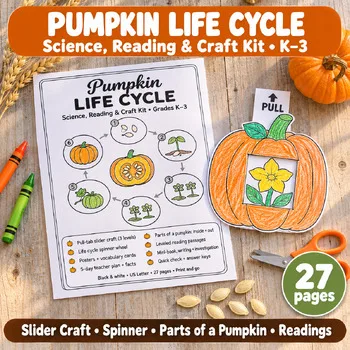 Pumpkin Life Cycle CraftKindergarten, 1st, 2nd, 3rd grade$3.25 · 27 pages
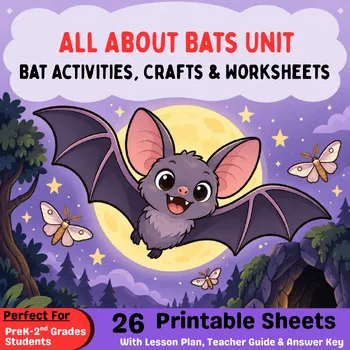 All About Bats UnitPreK, Kindergarten, 1st grade, 2nd grade$4.49 · 26 pages
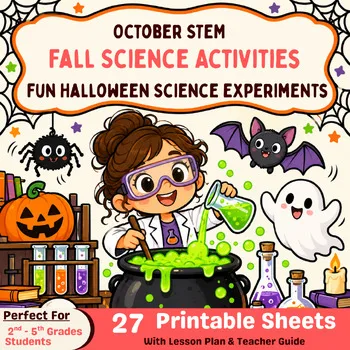 Halloween Science Experiments2nd, 3rd, 4th and 5th grade$3.25 · 27 pages
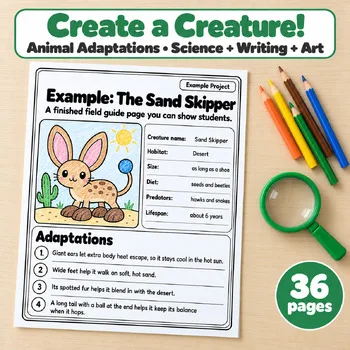 Creature Lab Adaptations Project3rd grade, 4th grade, 5th grade$4.49 · 36 pages
Frequently asked questions
What is the best free science video site for elementary?
PBS LearningMedia is free for educators, covers PreK-12, and shares to Google Classroom. The Kid Should See This and NASA Space Place are also open to use, and Science Buddies offers free projects and activities.
Is Mystery Science free?
Not permanently. Mystery Science sells school, district and homeschool memberships. Eligible teachers can apply for a free Classroom Scholarship that runs through June 30, 2027, but scholarships are limited per school and cover one homeroom teacher.
What is the difference between Mystery Science and Generation Genius?
Mystery Science is a K-5 curriculum of open-and-go, phenomenon-driven lessons sold mainly to schools. Generation Genius offers roughly 12-minute K-8 science and math videos with lesson plans and DIY activities, and sells Home or Classroom plans directly to teachers.
Which science platform works best for kindergarten?
BrainPOP Jr. is designed for K-3, with Easy quizzes tuned to K-1 reading levels and drawing and talking activities. Mystery Science also has kindergarten lesson sets, such as Animal Needs.
Can homeschool families use these science platforms?
Yes. Mystery Science has a homeschool membership, Generation Genius sells Home plans, BrainPOP Jr. has a homeschool K-3 plan, and PBS LearningMedia, NASA Space Place, The Kid Should See This and Science Buddies are open websites.
Make a tool for teachers?
Built something teachers love? We keep these guides fresh, so send us a new tool, updated pricing or a featured spot request.
Request a listingDisclosure: no tool on this page paid to be included and we don't earn commissions from these links. Featured placements, if we ever offer them, will be clearly labeled "Sponsored". Details were checked on each provider's official website on October 29, 2026 and can change.