A 4th grader can read a passage out loud without stumbling and still not be able to tell you what it was about. That gap between decoding and understanding is the daily work of grades 3–6 reading, and it is where a good comprehension website earns its place: short texts at the right level, questions that ask about meaning rather than memory, and a way for you to see which students are guessing.
The sites below cover the main ways teachers use the web for comprehension. There are free passage libraries with question sets, an adaptive program that finds each student's level, news sites that put current events at several reading levels, a printable worksheet library for no-screen days, and two school-purchase programs with leveled texts and teacher data tools.
How we picked: we started from a researched shortlist, then checked each tool's official website on November 1, 2026 and only describe features and plans we could see there. We weighted fit for grades 3–6 classrooms, whether the comprehension questions ask about meaning and evidence, and whether teachers can get started for free.
Key takeaways
- Best free starting point: ReadWorks, a nonprofit library of passages with question sets, free for teachers.
- CommonLit's text library is free for grades 3–12, with paired texts and guiding and assessment questions.
- ReadTheory's free Basic plan gives adaptive comprehension practice with a benchmark assessment.
- Newsela Lite is free; the full Newsela platform is a school or district purchase.
- Achieve3000 Literacy and Actively Learn are school-purchase programs with leveled texts and teacher data tools.
Quick comparison
| # | Tool | Best for | Grades / audience | Pricing | Free plan |
|---|---|---|---|---|---|
| 1 | free passages with question sets | Grades K–12 | Free | Free (nonprofit) | |
| 2 | a free text library for ELA units | Grades 3–12 | Free + paid | Free for teachers | |
| 3 | adaptive comprehension practice | Grades 1–12 | Freemium | Yes | |
| 4 | news and nonfiction at several levels | Grades K–12 | Freemium | Yes | |
| 5 | a school-funded leveled reading program | Grades 3–12 | School license | No | |
| 6 | turning your own texts into assignments | Grades 3–12 | School license | unverified | |
| 7 | daily current events reading | Grades 3–8 | Freemium | Yes | |
| 8 | printable comprehension practice | Grades 1–10 | Free | Yes |
Make a tool for teachers?
Built something teachers love? We keep these guides fresh, so send us a new tool, updated pricing or a featured spot request.
Request a listingThe 8 best picks
- Pricing
- Free
- Free plan
- Free (nonprofit)
- Grades / audience
- Grades K–12
ReadWorks is a nonprofit library of reading passages with question sets, built for teachers. You can search by grade, topic, and text level, then assign a passage digitally or print it, and the site scores most questions for you. Its Article-A-Day routine gives the class one short topical text a day to build background knowledge, vocabulary, and reading stamina.
What we like
- Passages paired with multiple-choice and open-ended comprehension questions
- StepReads, easier versions of the same passage for struggling readers
- Article-A-Day sets that build background knowledge with a short daily read
- Audio support, text sizing, and ELL and SPED tools
Watch out for
- The library is large, so finding the right passage takes a few minutes of filtering the first time.
- Student-facing features assume a teacher assigns the work; the site is built around teacher accounts.
Pricing: Free — ReadWorks describes its content, tools, and resources as free for teachers.
- Pricing
- Free + paid
- Free plan
- Free for teachers
- Grades / audience
- Grades 3–12
CommonLit is a nonprofit ELA program built around a free library of texts. Teachers pick passages by grade, genre, theme, or standard, and each text comes with guiding questions, assessment questions, and discussion prompts. The site also offers full CommonLit 360 curriculum units for grades 6–12 and benchmark assessments that show reading growth across the school year.
What we like
- Thousands of fiction and nonfiction passages for grades 3–12, with paired texts
- Guiding, assessment, and discussion questions with answer keys
- Full CommonLit 360 curriculum units for grades 6–12, free for teachers
- Three benchmark assessments that track reading growth across the year
Watch out for
- Answer keys sit behind a free teacher account.
- School-wide data tools and professional development are paid, so check with your school before planning around them.
Pricing: The text library and CommonLit 360 curriculum are free for teachers; school-wide support and professional development are paid.
- Pricing
- Freemium
- Free plan
- Yes
- Grades / audience
- Grades 1–12
ReadTheory is an adaptive reading comprehension program. A short benchmark finds each student's level, then the site serves passages and questions at that level and adjusts as the student answers, with feedback after every question. Teachers get reports by Lexile level, grade level, and standard, and can print passages and quizzes for days without screens.
What we like
- Adaptive benchmark assessment that finds each student's reading level
- Passages and questions that adjust as the student answers, with live feedback
- Beginning, middle, and end of year benchmarks built in
- Printable passages, quizzes, and graphic organizers for offline work
Watch out for
- The free plan covers 30 students and limited quizzes per week.
- Paid plans are priced per student, so costs grow with class size.
Pricing: Basic is free (1 teacher, 30 students, limited quizzes per week); School Champion is $1 per student per month, and school and district plans use custom pricing.
- Pricing
- Freemium
- Free plan
- Yes
- Grades / audience
- Grades K–12
Newsela is a content and assessment platform built around real-world texts. Articles come at different reading levels, so the same story can reach the whole class, and each one comes with quizzes and activities. Teachers get real-time results on student work, and the site also offers assessment tools and AI scaffolds that make grade-level content accessible to more readers.
What we like
- News and nonfiction articles published at different reading levels
- Quizzes and standards-aligned assessments with real-time results
- AI-powered scaffolds that make grade-level content accessible
- Content and activities for ELA, science, and social studies in one place
Watch out for
- Prices are not listed on the site; premium access goes through a school or district purchase.
- The homepage is aimed at district buyers, so teacher-facing details take some digging.
Pricing: Newsela Lite is free to sign up for; premium products are priced for schools and districts.
- Pricing
- School license
- Free plan
- No
- Grades / audience
- Grades 3–12
Achieve3000 Literacy is a supplemental digital literacy program for grades 3–12, now part of McGraw Hill. The same article is delivered at different reading levels matched to each student's Lexile measure, and the program adjusts as students answer. Teachers follow progress in the Teacher Data Center, and the program includes a Writing Assistant and a Career Center.
What we like
- Fiction and nonfiction texts differentiated to each student's reading level
- Adaptive lessons that adjust based on student performance
- Teacher Data Center with visibility into student performance
- Support for multilingual learners with grade-level texts
Watch out for
- No free plan or trial is described on the pages we checked.
- Access is usually through district single sign-on, so setup needs IT help.
Pricing: Priced for schools and districts; no prices were listed on the site.
- Pricing
- School license
- Free plan
- unverified
- Grades / audience
- Grades 3–12
Actively Learn is a digital curriculum platform for grades 3–12, now part of McGraw Hill. Teachers upload their own articles, documents, PDFs, or videos and add questions, notes, and scaffolds inside the text, or use the site's growing collection of ELA, science, and social studies content. Student answers and annotations appear in real time, so you can give feedback while the class is still reading.
What we like
- Upload articles, Google Docs, Google Slides, PDFs, and videos to build interactive assignments
- Embedded questions, annotations, and scaffolds inside each text
- Real-time performance data across standards and content areas
- A growing collection of ELA, science, and social studies texts, including novels
Watch out for
- No free plan is described on the pages we checked.
- Pricing was not listed on the pages we checked.
Pricing: Pricing was not listed on the pages we checked.
- Pricing
- Freemium
- Free plan
- Yes
- Grades / audience
- Grades 3–8
DOGOnews publishes kid-friendly news articles on science, sports, social studies, and current events for grades 3–8, with new articles every school day. Each article comes at more than one reading level, with read-along audio and highlighted vocabulary. Teachers can set up a class page and attach notes and questions, and the paid PRO plan adds a reading comprehension quiz, vocabulary work, and a critical thinking challenge for each article.
What we like
- New kid-friendly news articles every school day
- Articles at multiple reading levels with read-along audio
- Reading comprehension quiz, vocabulary, and critical thinking challenge with PRO
- Each article lists the standards it meets
Watch out for
- School license pricing is only available on request.
- The assessment tools need a PRO account.
Pricing: Articles are free to read on the site; DOGOnews PRO starts with a 7-day free trial, and school license pricing is available on request.
- Pricing
- Free
- Free plan
- Yes
- Grades / audience
- Grades 1–10
K12 Reader is a free worksheet site with a large reading comprehension section. Its 36-week programs give each grade a passage and related questions every week, and the passages cover fiction, science, history, and everyday topics. Everything is a printable worksheet, which makes it a good fit for homework, sub days, and classrooms where screens are limited.
What we like
- 36-week reading comprehension programs for grades 1–6, with a passage and questions each week
- Passages and questions grouped by grade, from 1st to 10th grade
- Free printable worksheets for use at home or in the classroom
- Cross-curricular passages in science and history for older grades
Watch out for
- Worksheets are printable PDFs, so you need a printer or a way to share them digitally.
- The site also covers spelling and grammar, so use the reading comprehension section to stay on topic.
Pricing: Free — the site describes its worksheets as free for use in the home or classroom.
How we chose
We started from tools PreK–6 teachers actually use and checked every one against its official website, pricing page and feature pages on November 1, 2026. We kept tools that fit elementary classrooms, noted whether a free plan exists, and wrote down honest limitations next to the strengths. Nobody paid to be included, and we don't use affiliate links on this page.
- Fit for PreK–6 classrooms, special education or homeschool
- Clear information on the official site about what the tool does and who it is for
- Free plan or free-for-teachers option noted where one exists
- Still active and maintained, with rebrands noted
How to choose the right tool
Start with the job the site has to do. For daily independent practice, an adaptive tool such as ReadTheory runs itself once students are set up. For a text to teach from, a free library such as ReadWorks or CommonLit gives you a passage and questions to build a lesson around. For current events, DOGOnews or Newsela keeps the reading fresh.
Check how reading levels are handled. ReadWorks StepReads, Newsela's leveled articles, and Achieve3000 Literacy all give the same content at different levels, so the whole class can discuss one text. K12 Reader's 36-week programs are fixed to a grade, which suits a set routine but not a mixed class.
Decide how much data you need. ReadTheory, Newsela, and Achieve3000 Literacy score answers and report progress, which helps with intervention groups. K12 Reader is printable worksheets, so you check the work yourself and get no dashboard.
Check the free path before you plan a unit around a site. ReadWorks, CommonLit, and K12 Reader are free, and ReadTheory and Newsela have free versions. Achieve3000 Literacy and Actively Learn are school purchases, so confirm access with your school first.
Match the text type to the skill you are teaching. News and nonfiction articles suit main idea and text evidence work, fiction passages suit inference and character work, and an adaptive program suits filling gaps you found in a benchmark.
Best pick by situation
- You need free passages with questions for tomorrow's lesson: ReadWorks — free library of passages with question sets for grades K–12
- You want adaptive practice that runs itself at a center: ReadTheory — adaptive benchmark and passages that adjust as students answer
- You want a current events article for morning meeting: DOGOnews — new kid-friendly news every school day, at several reading levels
- You need a text library to build a full ELA unit around: CommonLit — free library for grades 3–12 with paired texts and assessment questions
- Your school can fund a program with leveled texts and data: Achieve3000 Literacy — texts differentiated to each student's level, with a teacher data center
- You want to turn your own articles into online assignments: Actively Learn — upload articles, PDFs, and videos and add questions inside the text
Pair it with printables
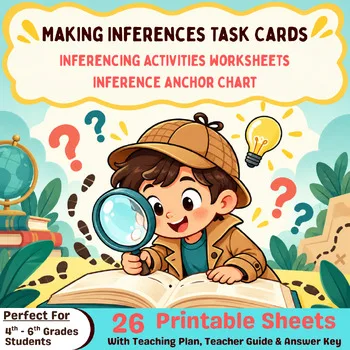
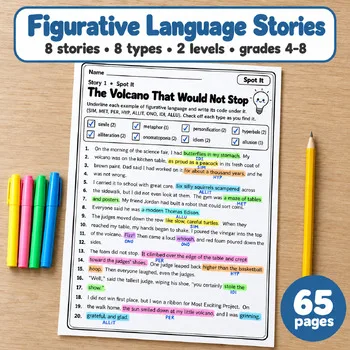
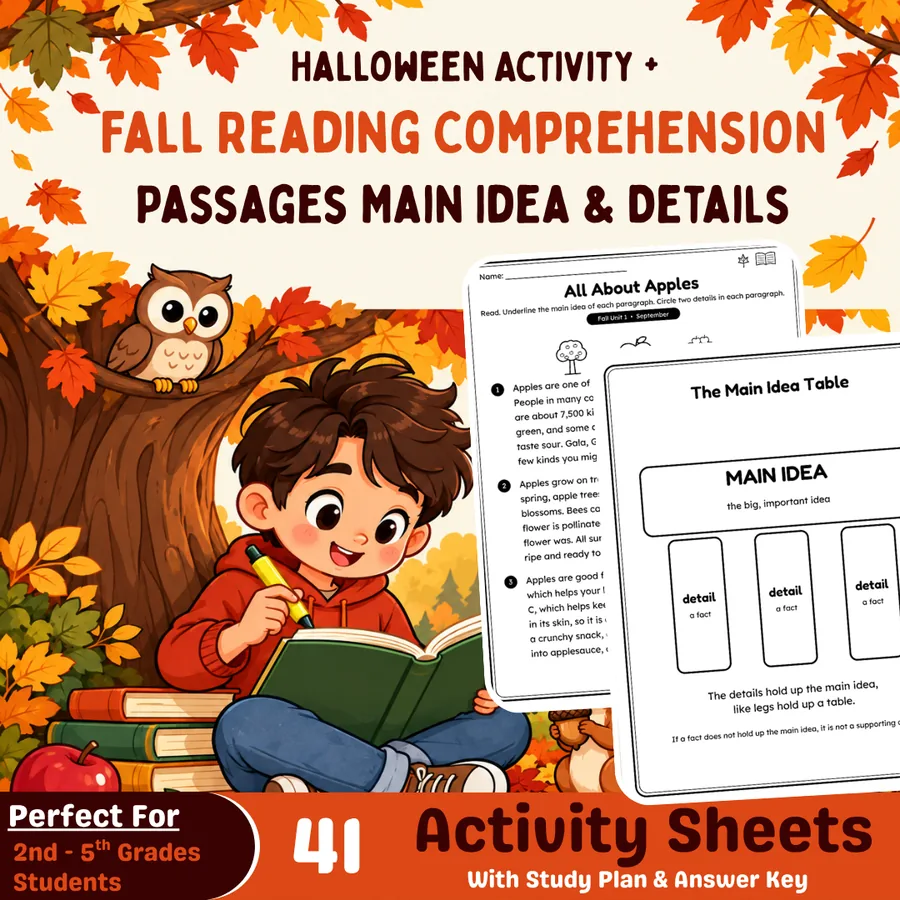
When you want hands-on comprehension practice away from the screen, these Activity Express printables pair well with any of the websites above.
Frequently asked questions
What is the best free reading comprehension website for 3rd grade?
ReadWorks and CommonLit are strong free starting points. ReadWorks offers free passages with question sets for grades K–12, and CommonLit's free text library covers grades 3–12 with guiding and assessment questions. ReadTheory's free Basic plan adds adaptive practice for one teacher and up to 30 students.
Is Newsela free for teachers?
Newsela Lite is free to sign up for. The full Newsela platform, with its premium content, activities, and real-time data, is priced for schools and districts, so a single teacher will usually start with Lite.
Which of these sites adapts to each student's reading level?
ReadTheory runs an adaptive benchmark and adjusts passages as the student answers. Achieve3000 Literacy differentiates its texts to each student's reading level, and ReadWorks offers StepReads, easier versions of the same passage for struggling readers.
Can I use these websites for homework?
ReadTheory, K12 Reader printables, and DOGOnews articles all work for home practice. Achieve3000 Literacy and Newsela need school accounts, so check that students can log in from home before assigning them.
Which site is best for current events reading?
DOGOnews adds new kid-friendly news articles every school day for grades 3–8, with multiple reading levels and read-along audio. Newsela covers current events too, with articles at different reading levels and quizzes, through its free Lite version or a school plan.
Make a tool for teachers?
Built something teachers love? We keep these guides fresh, so send us a new tool, updated pricing or a featured spot request.
Request a listingDisclosure: no tool on this page paid to be included and we don't earn commissions from these links. Featured placements, if we ever offer them, will be clearly labeled "Sponsored". Details were checked on each provider's official website on November 1, 2026 and can change.