It is Monday morning, and your class has never heard Spanish before. You press play, and a song about the days of the week fills the room. By Friday the children are singing it in the hallway — and asking what the words mean. That is how elementary Spanish usually starts: not with a textbook, but with a song, a story or a game that makes the new sounds feel safe.
The apps below cover every way into the language. Some are songs and videos made for whole-class teaching. One is a complete curriculum with lesson plans. Some are games and stories children play on their own, and one is the big free app millions of families already know. All eight were checked on their own official sites on November 5, 2026, and they range from free to about $39 a month, with free trials or free tiers on most of them.
We picked tools that fit PreK–6 classrooms and homeschool families: small independent studios that make songs and stories for young learners, two curriculum makers for teachers who want the whole year planned, and Duolingo for the free starting point. Prices and free tiers were taken from each tool's own site on the day of writing, so what you see here is what the site itself says — not a review site's summary. No tool here was paid to appear, and every one of them has something a teacher can use this week.
Key takeaways
- Best free starting point: Duolingo, with a full Spanish course free and a free Schools dashboard (ending July 31, 2027).
- Best for whole-class teaching: Rockalingua's songs and games, or Calico Spanish's four-level curriculum.
- Best for the youngest learners: Gus on the Go and Endless Spanish, both built for pre-readers.
- Best for stories: FabuLingua, where children listen, play and record themselves reading in Spanish.
- Best for families: Dinolingo, with one subscription covering up to six children across 50 languages.
Quick comparison
| # | Tool | Best for | Grades / audience | Pricing | Free plan |
|---|---|---|---|---|---|
| 1 | songs and whole-class Spanish routines | Grades K–6 | Paid | Trial only | |
| 2 | a full elementary Spanish curriculum | Grades K–6 | Paid | Trial only | |
| 3 | free daily Spanish practice | Confident readers, grades 3 and up | Freemium | Yes | |
| 4 | games and speaking practice, ages 2–8 | Ages 2–8 | Free + paid | Yes | |
| 5 | families and schools, 50 languages | Ages 2–14 | Paid | Trial only | |
| 6 | learning Spanish through stories | Ages 6–9 | Free + paid | Yes | |
| 7 | first Spanish words, ages 3–6 | Ages 3–6 (pre-readers) | Paid | No | |
| 8 | playful first words with monsters | Ages 3–6 (pre-readers) | Free + paid | Yes |
Make a tool for teachers?
Built something teachers love? We keep these guides fresh, so send us a new tool, updated pricing or a featured spot request.
Request a listingThe 8 best picks
- Pricing
- Paid
- Free plan
- Trial only
- Grades / audience
- Grades K–6
Rockalingua is a music-first Spanish library built for elementary classrooms. Its original songs teach high-frequency words and grammar through singing, movement and Total Physical Response, with videos, video comics, games and worksheets built around the same themes. A teacher can open a lesson with a song, follow it with the lyric sheet, and finish with a game — or run a full K–6 curriculum from the same library.
What we like
- Original songs that teach numbers, colors, weather, feelings, daily routines and culture, each with an illustrated lyric sheet
- Videos and video comics that pair vocabulary with grammar in context, plus crafts and games
- Zero-prep lessons with live Kahoot-style games the class plays together
- Classroom and Pro plans add shared class logins, assignments with auto-grading and progress reports
Watch out for
- No free plan beyond the 14-day trial
- School and district pricing is by quote, not listed on the pricing page
Pricing: Content plan $19/month or $189/year; Classroom $29/month or $249/year; Pro $39/month or $349/year. Every plan starts with a 14-day free trial.
- Pricing
- Paid
- Free plan
- Trial only
- Grades / audience
- Grades K–6
Calico Spanish is a complete Spanish curriculum for elementary classrooms, built by teachers around stories, songs and play. Its Stories program runs in four levels (A–D) with step-by-step lesson plans, video stories, music videos, comic readers, flashcards, posters and activity sheets — over 200 hours of planned lessons. The teacher guides every lesson, and native-speaker audio carries the Spanish, so it works for teachers of any Spanish ability.
What we like
- Four levels (A–D) of story-driven lessons with daily goals and step-by-step plans
- Video stories, music videos, songs and Culture Capsules about Spanish-speaking cultures
- Comic readers, workbooks, flashcards and posters, printable or purchasable
- Google Classroom activity sheets and a School-to-Home video page that sends stories home
Watch out for
- No student logins — the teacher's login runs the lessons
- Printed comic readers and workbooks are separate purchases
Pricing: A one-year teacher license is $329, or $39/month; a 5-year license is $1,299. A 7-day free trial opens 8 units.
- Pricing
- Freemium
- Free plan
- Yes
- Grades / audience
- Confident readers, grades 3 and up
Duolingo is the big free language app, and its Spanish course runs on short, game-like lessons with points, levels and streaks. Students read, listen, speak and write in bite-sized exercises that adapt to what they get right and wrong, and the whole core course costs nothing. Duolingo for Schools adds a free teacher dashboard with assignments and progress insights on top of the same app.
What we like
- Short game-like Spanish lessons with speaking, listening, reading and writing
- Adaptive exercises that adjust to each student's strengths and gaps
- Duolingo for Schools: free teacher accounts, class sections, assignments and progress insights
- Works on the web and on phones and tablets, so practice continues at home
Watch out for
- The Schools dashboard ends July 31, 2027 — the free app itself continues
- The free version shows ads, and the app suits confident readers best
Pricing: The core Spanish course is free with ads; Super Duolingo is the paid ad-free plan. Duolingo for Schools is free.
- Pricing
- Free + paid
- Free plan
- Yes
- Grades / audience
- Ages 2–8
Studycat's Spanish app teaches through more than 1,000 games designed by language-learning experts, with stories, songs and an adventure mode where children explore a virtual town. Its VoicePlay technology listens as children speak and gives instant feedback on pronunciation, and progress reports show how each child is doing. The app is ad-free and kidSAFE-listed, and a free version covers a limited set of activities.
What we like
- 1,000+ games covering vocabulary, pronunciation, listening and handwriting
- VoicePlay real-time voice recognition with instant speaking feedback
- Stories, songs and an adventure mode with a clear learning path
- Up to 4 learner profiles, progress reports and subscriptions that work across iOS and Android
Watch out for
- Full access needs a subscription; the free version is limited
- Subscription prices appear in the app stores, not on the website
Pricing: A free version covers limited activities; full access is a monthly or annual subscription after a 7-day free trial (no credit card needed for the trial).
- Pricing
- Paid
- Free plan
- Trial only
- Grades / audience
- Ages 2–14
Dinolingo is a kids' language platform with videos, games, songs, books and printable worksheets across 50 languages, including a full Spanish course for ages 2–14. One family subscription covers up to six children, each with their own settings and progress tracking, and everything is ad-free. Schools get the same library with pricing by enrollment.
What we like
- Spanish lessons with videos, games, songs, books and printable worksheets for ages 2–14
- One family subscription covers up to 6 children across all 50 languages
- Progress tracking and reporting tools for parents on the website
- Ad-free and COPPA-compliant, with school plans for Pre-K to 9th grade
Watch out for
- No free plan beyond the 7-day trial
- School pricing is by enrollment — the smallest school plan is $499/year
Pricing: $19/month or $199/year for a family (up to 6 children), after a 7-day free trial. School plans start at $499/year.
- Pricing
- Free + paid
- Free plan
- Yes
- Grades / audience
- Ages 6–9
FabuLingua teaches Spanish through interactive stories in a mobile game. Children listen to narrated stories, play with the words inside them, and record themselves reading or repeating sentences, so reading and speaking grow together. It is built for elementary-age children, with a teacher dashboard for classroom use.
What we like
- Interactive Spanish stories with narration, games and audiobooks
- Children record themselves reading and repeating sentences
- 6 learner profiles on every subscription, so siblings or a small group can share one plan
- A teacher dashboard for classroom use, with a free tier covering the tutorial story and one full story
Watch out for
- Most stories need a subscription after the free trial
- Built for ages 6–9 — younger children may find the stories long
Pricing: $11.99/month or $69.99/year, with a 7-day free trial. A free tier covers the tutorial story plus one full story.
- Pricing
- Paid
- Free plan
- No
- Grades / audience
- Ages 3–6 (pre-readers)
Gus on the Go is a small vocabulary app starring Gus, a curious owl travelling through Mexico. A native Spanish speaker guides children through about 90 words — animals, food, transport, clothes, numbers and more — in 10 interactive lessons, with lesson reviews that unlock vocabulary games. Because the menus use pictures and audio rather than text, pre-readers can use it on their own. A second app, Stories by Gus on the Go, retells classic stories with a silly twist in Spanish.
What we like
- About 90 Spanish words with clear native-speaker audio
- 10 interactive lessons, each ending in a review that unlocks a vocabulary game
- Picture-and-audio menus, so children who cannot read yet can play alone
- Stories by Gus on the Go adds familiar tales (like the Lion and the Mouse) in Spanish
Watch out for
- One-off purchase — no free version of the vocabulary app
- Teaches words, not sentences or conversation
Pricing: A one-off paid app in the app stores; the official site does not list the price. Stories by Gus on the Go is free.
- Pricing
- Free + paid
- Free plan
- Yes
- Grades / audience
- Ages 3–6 (pre-readers)
Endless Spanish introduces Spanish with the help of the Endless monsters — the same characters behind Endless Alphabet. Each word gets an interactive puzzle where the letters come to life, and a sentence puzzle where the words turn into what they describe: the word “grande” grows larger, and “flor” opens and blooms. Two audio modes suit different children: Spanish Immersion for native speakers and advanced learners, and Spanish with English Translation for most English speakers.
What we like
- Interactive word puzzles with letters that come to life
- Sentence puzzles that teach each word's meaning and use
- Two audio modes: Spanish Immersion and Spanish with English Translation
- Delightful animations with no scores, failures or time limits
Watch out for
- Only a first set of words is free; the rest are paid packs
- No progress tracking or teacher tools
Pricing: Free to download with a first set of words included; extra word packs are a paid add-on. The official site does not list prices.
How we chose
We started from tools PreK–6 teachers actually use and checked every one against its official website, pricing page and feature pages on November 5, 2026. We kept tools that fit elementary classrooms, noted whether a free plan exists, and wrote down honest limitations next to the strengths. Nobody paid to be included, and we don't use affiliate links on this page.
- Fit for PreK–6 classrooms, special education or homeschool
- Clear information on the official site about what the tool does and who it is for
- Free plan or free-for-teachers option noted where one exists
- Still active and maintained, with rebrands noted
How to choose the right tool
Match the app to the child's reading level, not just their age. Pre-readers do best with picture-and-audio apps like Gus on the Go and Endless Spanish; confident readers can handle Duolingo's text-heavy lessons.
Decide what the screen time is for. Songs (Rockalingua) open a lesson, stories (FabuLingua) build listening and reading, games (Studycat, Dinolingo) fill a center, and a curriculum (Calico Spanish) carries the whole year.
Try the free layer first. Duolingo's core course is free, FabuLingua and Studycat have free versions, and Rockalingua, Calico Spanish and Dinolingo all offer free trials — run one unit before paying for a year.
If you use Duolingo for Schools, plan around its sunset date: the dashboard ends July 31, 2027, so export anything you need from it before then.
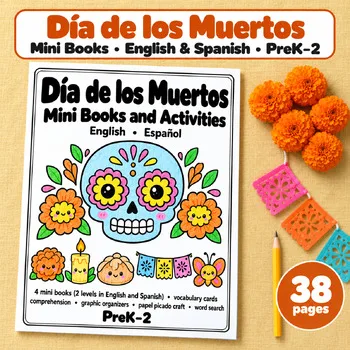
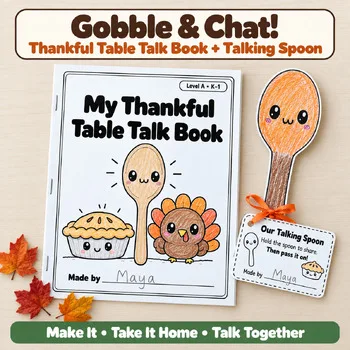
Pair every app with something students can hold. A song lands better when the class then sings it with a lyric sheet, writes the words, or makes a bilingual mini book — the printables below are built for that step.
Check the device before you buy. Rockalingua and Calico Spanish run in a browser, Duolingo and Studycat work on the web and on phones and tablets, and Gus on the Go and Endless Spanish are download apps — make sure the app is on the devices your students actually use.
Best pick by situation
- You need a free Spanish warm-up for tomorrow: Duolingo — the core course costs nothing and runs in minutes
- You teach Spanish to a whole class and want songs: Rockalingua — original songs with lyric sheets and live games
- You want a full-year Spanish curriculum: Calico Spanish — four levels of step-by-step story lessons
- Your youngest students cannot read yet: Gus on the Go — picture-and-audio menus with about 90 first words
- You want children to read and speak in stories: FabuLingua — interactive stories with voice recording
- You need one subscription for several children: Dinolingo — up to six children on one family plan
Pair it with printables
These printables from our store pair with the apps above — bilingual mini books and a two-language table-talk craft that get students reading, writing and speaking Spanish away from the screen.
Frequently asked questions
What is the best free Spanish app for kids?
Duolingo, whose core Spanish course is free with ads, and Endless Spanish, free to download with a first set of words. FabuLingua and Studycat also have free tiers with limited content.
Which app is best for a whole class?
Rockalingua's Classroom or Pro plan, or Calico Spanish's teacher license. Both are built for teachers — Rockalingua with class logins and live games, Calico Spanish with step-by-step lesson plans.
What age should children start learning Spanish?
Gus on the Go, Endless Spanish and Studycat are built for ages 2–3 and up. FabuLingua suits ages 6–9, Dinolingo covers ages 2–14, and Duolingo works best once children read confidently.
Do any of these work without student accounts?
Rockalingua's Content plan needs no student login, and Calico Spanish has no student logins at all — the teacher runs the lesson. The download apps, Gus on the Go and Endless Spanish, run on a device with no account.
I don't speak Spanish — can I still teach it?
Yes. Calico Spanish is built for teachers of any Spanish ability, with native-speaker audio and step-by-step plans, and Rockalingua's songs come with lyric sheets and worksheets. Start with one of those and learn alongside the class.
Make a tool for teachers?
Built something teachers love? We keep these guides fresh, so send us a new tool, updated pricing or a featured spot request.
Request a listingDisclosure: no tool on this page paid to be included and we don't earn commissions from these links. Featured placements, if we ever offer them, will be clearly labeled "Sponsored". Details were checked on each provider's official website on November 5, 2026 and can change.