Every elementary teacher knows the student. They finish the worksheet in five minutes, ask a question the textbook never thought of, and then sit quietly while the rest of the class catches up. That student does not need more of the same work — they need harder problems, stranger questions and a project big enough to get lost in. That is what enrichment is for.
The tools below give able students that stretch in different ways. Some are advanced maths built as comics and puzzles. Some are whole enrichment platforms that start by finding out what a child is good at, then match activities to it. Some are free libraries of lesson plans, articles and guidance written for gifted children and the adults around them. One is live teaching, one small class at a time. All of them were checked on their own official sites on November 5, 2026, and four of the nine cost nothing at all.
We picked tools that fit elementary classrooms and homeschool families: free nonprofit resource sites, small independent gifted-education sites, and the big paid names for schools that want a full platform or live classes. No tool here was paid to appear, and every one of them has something a teacher can use this week.
Key takeaways
- Best free starting point: Mensa for Kids, with lesson plans and activity plans for grades K–12 that cost nothing.
- Beast Academy is the strongest advanced-math choice for grades 2–5, with comic-style books and an online platform of 800+ lessons.
- Renzulli Learning is the only full enrichment platform here: a profiler, a creativity test and 40,000+ activities for K–12.
- The Davidson Institute, Hoagies' Gifted Education Page and Mathigon are free, small and independent — guidance, a resource library and maths explorations with no account cost.
- Outschool is the only live teaching here: gifted-learner classes and 1:1 tutoring, priced per class.
Quick comparison
| # | Tool | Best for | Grades / audience | Pricing | Free plan |
|---|---|---|---|---|---|
| 1 | advanced maths for grades 2–5 | Grades 2–5 (ages 6–13) | Paid | No | |
| 2 | a whole-school enrichment platform | K–12 | School license | Trial only | |
| 3 | free lesson plans for gifted students | Grades K–12 | Free | Yes | |
| 4 | guidance and community for profoundly gifted children | Ages 5–18 | Free | Free (nonprofit) | |
| 5 | free gifted-education guidance in one place | Parents and teachers of all ages | Free | Yes | |
| 6 | free maths explorations and puzzles | Not stated | Free | Yes | |
| 7 | adaptive practice that moves at each child's pace | Pre-K–12 | Paid | Trial only | |
| 8 | live classes for gifted learners | Gifted classes for ages 6–12 | Paid | No | |
| 9 | trusted guidance on gifted education | Educators and families | Free + paid | Yes |
Make a tool for teachers?
Built something teachers love? We keep these guides fresh, so send us a new tool, updated pricing or a featured spot request.
Request a listingThe 9 best picks
- Pricing
- Paid
- Free plan
- No
- Grades / audience
- Grades 2–5 (ages 6–13)
Beast Academy is advanced maths for elementary students, made by the Art of Problem Solving team. The curriculum comes as comic-style Guide books and Practice books for levels 1 to 5, aimed at grades 2 to 5, and as Beast Academy Online, an interactive platform with lessons, problems and videos. The problems are puzzles first and exercises second. It is the curriculum for the child who finds ordinary maths too easy.
What we like
- Comic-style Guide books and Practice books for levels 1–5, for ages 6–13
- Beast Academy Online: 800+ lessons, 15,000+ problems and 700 instructional videos
- A parent dashboard for following progress, plus digital Guide books
- Live online classes for levels 2–5, and school licensing for whole classes
Watch out for
- No free plan — every option is a paid subscription or bundle
- Levels are numbered 1–5 rather than by grade, so check the placement guidance before choosing a level
Pricing: Monthly $15.99 or yearly $99.99 per student; a bundle with one year level of paper books is $160/year; additional siblings are discounted; school licenses are quoted.
- Pricing
- School license
- Free plan
- Trial only
- Grades / audience
- K–12
Renzulli Learning is a K–12 enrichment platform built on the Schoolwide Enrichment Model, the framework developed by Dr. Joseph Renzulli and Dr. Sally Reis at the University of Connecticut. It starts by finding out what each student is good at: the Renzulli Profiler is a 20 to 30 minute survey, available in more than 20 languages, and the Cebeci Test of Creativity measures creative thinking. The platform then matches each student to activities from an enrichment database of more than 40,000.
What we like
- Renzulli Profiler: a 20–30 minute strengths survey in 20+ languages
- Cebeci Test of Creativity, plus project-based learning tools
- An enrichment database of more than 40,000 curated activities
- A Personal Success Plan for each student, and alignment with gifted standards in all 50 states
Watch out for
- No free plan — only a 30-day trial, and it is priced per student
- The platform is broad, so plan time to learn the profiler and the activity database before rolling it out
Pricing: $15 per student per year; free 30-day trial with no credit card required; school site licenses available.
- Pricing
- Free
- Free plan
- Yes
- Grades / audience
- Grades K–12
Mensa for Kids is the free site from the Mensa Foundation, built for gifted young people and the adults who teach them. It holds lesson plans for grades K–12 — The Moon for grade 1, The Cell for grade 5, Greek Mythology and Fabulous Fibonacci among them — each with assessment strategies and rubrics. Alongside them are activity plans such as Penny Science, a LEGO maze and 100 Days of Learning, plus TED Connections, which pair TED talks with discussion questions. Everything is free, and the plans work for one child, a whole class or a homeschool.
What we like
- Lesson plans for grades K–12, with assessment strategies and rubrics
- Activity plans including Penny Science, a LEGO maze and 100 Days of Learning
- TED Connections: TED talks paired with discussion questions
- Designed for gifted youth, usable individually, in class or at home
Watch out for
- The site is aimed at gifted youth, so some plans assume a quicker reader
- No accounts or tracking — you print the plan and run it yourself
Pricing: Free — every lesson plan and activity plan costs nothing.
Davidson Institute
Best for: guidance and community for profoundly gifted children
- Pricing
- Free
- Free plan
- Free (nonprofit)
- Grades / audience
- Ages 5–18
The Davidson Institute is a nonprofit that supports profoundly gifted young people, ages 5 to 18, and their families. Its Young Scholars program is free and gives families resources, webinars and a community of other families. The Davidson Gifted Database is a free, searchable library of articles and state policy pages, and the Resource Library and Guiding Gifted newsletter answer the questions parents ask most. The Institute also runs the Fellows scholarship, worth up to $100,000, summer programs for ages 8 to 13, and Explore online courses for ages 9 to 13.
What we like
- Young Scholars program: free resources, webinars and community for ages 5–18
- Davidson Gifted Database: free searchable articles and state policy pages
- Fellows scholarships of up to $100,000 for students 18 and under
- Summer programs for ages 8–13 and Explore online courses for ages 9–13
Watch out for
- Program places are limited and applications have deadlines, so check the dates early
- The Davidson Academy schools are separate from the Institute's free programs
Pricing: Free — the Young Scholars program, the Gifted Database and the Resource Library cost nothing.
Hoagies' Gifted Education Page
Best for: free gifted-education guidance in one place
- Pricing
- Free
- Free plan
- Yes
- Grades / audience
- Parents and teachers of all ages
Hoagies' Gifted Education Page is a long-running, donation-supported nonprofit site run by Carolyn K. Gifted 101 is the starting point for first-time visitors, and Gifted 102 takes the next steps. Beyond that are curriculum enrichment resources, a gifted library of book lists, pages on products and publishers, and smart toys and games. The site covers identification and testing, twice-exceptional learners and homeschooling — the whole of gifted education in one place, free to read.
What we like
- Gifted 101 and Gifted 102: plain guides for parents and teachers new to gifted education
- Curriculum enrichment resources and a gifted library of book lists
- Pages on products, publishers and smart toys and games
- Coverage of identification, testing, twice-exceptional learners and homeschooling
Watch out for
- The design is plain and older — the content is the value
- Some pages link out to other sites, so check a link before sharing it with families
Pricing: Free — a donation-supported nonprofit; it offers no grants.
- Pricing
- Free
- Free plan
- Yes
- Grades / audience
- Not stated
Mathigon calls itself the Mathematical Playground, and it is free. Its interactive courses and explorations — Fractals, Sequences, Graph Theory, Origami, Symmetry, a Timeline of mathematics and the Factris puzzle game — let students discover maths by playing with it rather than reading about it. There are free teacher resources and lesson plans, and free accounts for teachers and parents. Polypad, Mathigon's virtual manipulatives, has moved to Amplify, but the link sits on the Mathigon home page.
What we like
- Interactive explorations: Fractals, Sequences, Graph Theory, Origami, Symmetry and a Timeline
- Factris, a puzzle game, and Flash Cards for fluency practice
- Free teacher resources, lesson plans and events
- Free teacher accounts for creating classes, adding students and sharing work
Watch out for
- Polypad now lives at polypad.amplify.com, not on Mathigon itself
- The explorations cover advanced topics like fractals and graph theory — preview them for your grade first
Pricing: Free — every tool, course and manipulative costs nothing.
- Pricing
- Paid
- Free plan
- Trial only
- Grades / audience
- Pre-K–12
IXL is adaptive practice for Pre-K to grade 12, across maths, language arts, science, social studies and Spanish. It calls itself personalised learning: the questions adjust to each student's level, so a child who is ready for harder work is not held back by their grade label. Families, classrooms and schools each have their own membership, and classroom plans start with a free trial.
What we like
- Adaptive practice in maths, language arts, science, social studies and Spanish
- Personalised learning paths that adjust to each student's level
- Family, classroom and school memberships
- Classroom plans start with a free trial
Watch out for
- Family memberships are paid; the free trial is for classrooms
- Check the membership page for current prices before budgeting
Pricing: Paid family memberships, monthly or yearly; classroom and school licenses are quoted — check the membership page for current prices.
- Pricing
- Paid
- Free plan
- No
- Grades / audience
- Gifted classes for ages 6–12
Outschool is live online teaching, one small class at a time. It has a dedicated category for gifted learners, with classes and 1:1 tutoring led by gifted-education specialists — a Gifted and Talented small-group class for ages 8 to 12, a Cryptography Club for ages 9 to 12, a Critical Thinking and Creativity Club, and 1:1 tutoring for advanced and gifted learners ages 6 to 12. Classes are priced per class or per session, and self-paced options sit alongside the live ones.
What we like
- A dedicated 'Gifted learners' class category
- Live video classes and 1:1 tutoring with gifted-education specialists
- Small-group classes, including Gifted and Talented for ages 8–12
- Self-paced class options alongside live classes, with vetted educators
Watch out for
- Costs add up fast across a term — check the per-class price before enrolling
- Classes are listed by age, not grade, so check the age range first
Pricing: Pay per class — gifted classes start at around $15 per class, and 1:1 tutoring from $30 per session; check the class page for the current price.
- Pricing
- Free + paid
- Free plan
- Yes
- Grades / audience
- Educators and families
NAGC is the National Association for Gifted Children, the professional association for gifted education in the United States. Its site is the place to go when a teacher or parent needs guidance they can trust: twice-exceptional resource kits, parent tip sheets, on-demand webinars, and books and journals including Gifted Child Quarterly, Gifted Child Today and the Journal of Advanced Academics. Its magazines, Teaching for High Potential and Parenting for High Potential, are written for the classroom and the kitchen table.
What we like
- Twice-exceptional resource kits and parent tip sheets
- On-demand webinars for educators and families
- Books and journals: Gifted Child Quarterly, Gifted Child Today, Journal of Advanced Academics
- Magazines Teaching for High Potential and Parenting for High Potential, plus the NAGC Engage community
Watch out for
- Some resources are member-only, so check before planning a lesson around one
- Membership is yearly — check the membership page for current rates
Pricing: Many resources are free; membership is Premier $129/year, Parent $69/year or Student $69/year.
How we chose
We started from tools PreK–6 teachers actually use and checked every one against its official website, pricing page and feature pages on November 5, 2026. We kept tools that fit elementary classrooms, noted whether a free plan exists, and wrote down honest limitations next to the strengths. Nobody paid to be included, and we don't use affiliate links on this page.
- Fit for PreK–6 classrooms, special education or homeschool
- Clear information on the official site about what the tool does and who it is for
- Free plan or free-for-teachers option noted where one exists
- Still active and maintained, with rebrands noted
How to choose the right tool
Start with the student, not the subscription. A child who devours maths wants Beast Academy or Mathigon. A child who asks endless why questions wants Renzulli Learning's enrichment activities or the Davidson Institute's database. A child who needs people to talk to wants Outschool's live classes.
Match the reading level, not just the grade label. Beast Academy is built for grades 2–5. Mensa for Kids lesson plans are labelled by grade, from grade 1 up. Mathigon's explorations suit upper elementary and older students best.
Try the free tools before spending anything. Mensa for Kids, the Davidson Institute, Hoagies' Gifted Education Page and Mathigon all cost nothing. Use them for a unit first, then decide whether a paid platform like Beast Academy or Renzulli Learning adds enough to justify the cost.
Check whether you need accounts. The free resource sites need none. Beast Academy, Renzulli Learning and IXL want accounts for assigning work and seeing progress, so check your school's sign-in rules before planning a lesson around them.
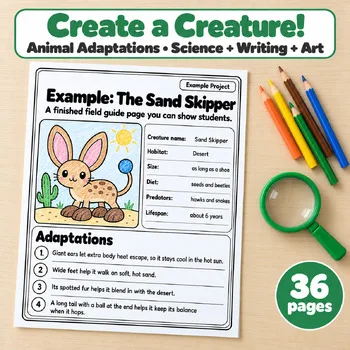
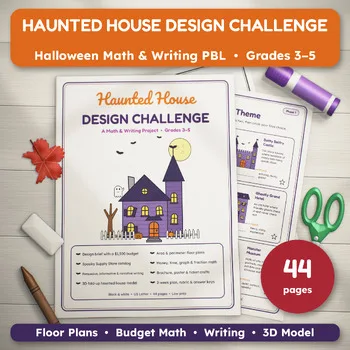
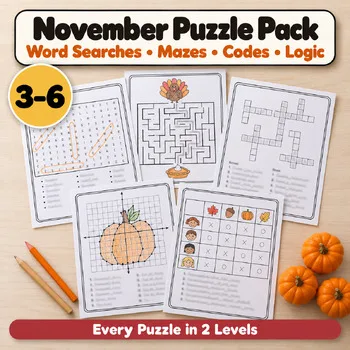
Pair the screen with something students can hold. A maths exploration lands better when the class then builds, designs or solves on paper. The printables in the box below are built for exactly that step — a creature-design project, a haunted-house design project and puzzle packs for early finishers.
Best pick by situation
- You need a free enrichment activity for tomorrow: Mensa for Kids — lesson and activity plans ready to print
- A student has finished the math book and needs harder problems: Beast Academy — comic-style advanced math for grades 2–5
- Your school wants one platform for all its gifted students: Renzulli Learning — profiler plus 40,000+ enrichment activities
- A parent asks where to start with a gifted child: Davidson Institute — free Young Scholars community and Gifted Database
- You want a ready-made answer to a gifted-education question: Hoagies' Gifted Education Page — Gifted 101 and a deep library of articles
- You need adaptive practice that moves at each child's pace: IXL — Pre-K–12 practice across five subjects
- You want a live class taught by a specialist: Outschool — gifted-learner classes and 1:1 tutoring
- You need a maths challenge that feels like play: Mathigon — free explorations, puzzles and games
- You want research-backed guidance for twice-exceptional students: NAGC — 2e resource kits and parent tip sheets
Pair it with printables
These printables from our store pair with the tools above — a creature-design project, a haunted-house design project and puzzle packs that give fast finishers real problems to chew on.
Frequently asked questions
What is the best free gifted resource for elementary school?
Mensa for Kids is the strongest free starting point, with lesson plans and activity plans for grades K–12. The Davidson Institute's Gifted Database and Hoagies' Gifted Education Page are the next ones to try for guidance and articles.
My student finishes everything early — what actually stretches them?
Beast Academy for maths, Renzulli Learning's enrichment activities and Mathigon's explorations all give able students harder problems instead of more of the same. The November Early Finisher Puzzles in the box below do the same thing on paper.
Do I need a paid platform, or are free sites enough?
Most classrooms get by with the free sites. A paid platform like Beast Academy or Renzulli Learning makes sense when you want a sequenced curriculum or a whole-school enrichment system, with progress tracking included.
Can I use these tools without student accounts?
Yes, for most of them. The Davidson Institute, Hoagies' Gifted Education Page and Mensa for Kids need no account at all. Beast Academy, Renzulli Learning and IXL work best with accounts so you can assign work and track progress.
Which tool is best for twice-exceptional students?
NAGC, with its twice-exceptional resource kits and parent tip sheets, and Hoagies' Gifted Education Page, which has a whole section on twice-exceptional learners. The Davidson Institute covers the topic in its resource library too.
Make a tool for teachers?
Built something teachers love? We keep these guides fresh, so send us a new tool, updated pricing or a featured spot request.
Request a listingDisclosure: no tool on this page paid to be included and we don't earn commissions from these links. Featured placements, if we ever offer them, will be clearly labeled "Sponsored". Details were checked on each provider's official website on November 5, 2026 and can change.