Your students can count coins and make change, but ask the class whether to save birthday money or spend it and the room goes quiet. Counting money is a math skill; deciding what to do with money is a different skill, and it is the one most money lessons skip. Saving, budgeting, telling a want from a need, and waiting for a goal are habits, and habits only form when children practise the choice, not just the counting.
The tools below cover both halves of the job. There are free classroom courses with ready lesson plans, a volunteer-led program that sends a guest teacher into your room, a game where students run a lemonade stand, a virtual bank for a class savings project, and an investing simulation for upper elementary. Two debit-card apps for families close the list — ones to recommend to parents, not run yourself.
How we picked: we checked each tool's official website on November 3, 2026 and only describe features and plans we could see there. We weighted fit for PreK–6 classrooms, whether a teacher can start for free, and whether the tool makes children make money decisions instead of only counting coins.
Key takeaways
- Best free starting point: Practical Money Skills, with ready lesson plans for PreK–6.
- EVERFI and Banzai are free digital courses — EVERFI for whole-class lessons, Banzai as a money game for grades 3–7.
- Junior Achievement brings trained volunteers into the classroom at no cost to schools.
- Bankaroo is the only free virtual bank here, and its school edition is free for a first class.
- Greenlight and Acorns Early are paid family apps; share them with parents rather than running them as class accounts.
Quick comparison
| # | Tool | Best for | Grades / audience | Pricing | Free plan |
|---|---|---|---|---|---|
| 1 | free classroom money lessons | PreK–grade 6 | Free | Yes | |
| 2 | free digital money courses | K–12 | Free | Free for teachers | |
| 3 | money games for grades 3–7 | Grades 3–7 | Free | Free for teachers | |
| 4 | volunteer-led money lessons | Kindergarten–grade 5 | Free | Free for teachers | |
| 5 | money talks at home | Ages 3 and up | Free | Yes | |
| 6 | a virtual classroom bank | Ages 5–14 | Freemium | Yes | |
| 7 | investing practice, grades 4–6 | Grades 4–12 | Free + paid | Free (nonprofit) | |
| 8 | a debit card with chores | Kids and teens, all ages | Paid | No | |
| 9 | money lessons with a debit card | Ages 6–18 | Paid | No |
Make a tool for teachers?
Built something teachers love? We keep these guides fresh, so send us a new tool, updated pricing or a featured spot request.
Request a listingThe 9 best picks
- Pricing
- Free
- Free plan
- Yes
- Grades / audience
- PreK–grade 6
Practical Money Skills is Visa's free financial literacy program, built around a classroom curriculum with teacher's guides, lesson plans, and student activities. The youngest lessons cover money basics and budgeting for Pre-K through grade 2, while the grades 3–6 lessons move on to allowances, budgeting, responsible spending, saving, investing, and comparison shopping. It also offers comic-book lessons, including Avengers and Black Panther titles with instruction guides for grades 2–7, which work well as a hook before the plainer worksheet work.
What we like
- Teacher's guides and lesson plans for Pre-K–2 and grades 3–6
- Free comic-book lessons with instruction guides, including Avengers and Black Panther titles for grades 2–7
- Articles and tools on saving, budgeting, banking, debt, and investing
- Student activities and worksheets, including spending-plan envelopes for young children
Watch out for
- The homepage leads with articles for adults, so use the Teach section for classroom material.
- Some lesson PDFs live on partner subdomains, so bookmark the lesson plan page itself.
Pricing: Free — the program, lesson plans, and comics are free on the site.
- Pricing
- Free
- Free plan
- Free for teachers
- Grades / audience
- K–12
EVERFI offers free, standards-aligned digital courses on financial literacy and other life skills for K-12 schools. The courses are digital lessons with offline extensions, and they come with built-in grading and assessments, so the teacher does not have to mark the work by hand. Schools pay nothing for them: regional financial institutions and other businesses sponsor the courses, which are built to fit yearly planning and to meet state mandates.
What we like
- Free interactive digital courses on financial literacy and life skills
- Built-in digital grading and assessments
- Offline lesson extensions alongside the digital courses
- Courses designed to fit yearly planning and meet state mandates
Watch out for
- The main homepage now speaks to sponsors, so teachers should start at the K-12 page.
- Courses are sponsored by regional institutions, so ask your local EVERFI contact which courses are open in your area.
Pricing: Free for schools — regional financial institutions and businesses sponsor the courses.
- Pricing
- Free
- Free plan
- Free for teachers
- Grades / audience
- Grades 3–7
Banzai teaches money through interactive games instead of lectures. Its elementary course, for grades 3–7, has students run a lemonade stand: they track revenue and expenses, pay back a loan, and work toward a savings goal. The same site offers middle school and high school courses, plus digital citizenship, entrepreneurship, and college and careers courses, and the courses are available in 20 languages.
What we like
- Elementary course for grades 3–7 built around running a lemonade stand
- Students track revenue and expenses, repay loans, and save toward a goal
- Courses in 20 languages
- Middle and high school courses plus digital citizenship and entrepreneurship
Watch out for
- The youngest course starts in grade 3, so pair it with a younger option for K–2.
- The site also offers high school and college courses, so start from the elementary course page.
Pricing: Free for schools and teachers — the site describes its courses as free financial literacy education.
- Pricing
- Free
- Free plan
- Free for teachers
- Grades / audience
- Kindergarten–grade 5
Junior Achievement is a nonprofit that brings hands-on financial literacy programs into classrooms, taught by trained corporate and community volunteers. The elementary programs run grade by grade: JA Ourselves in kindergarten uses storybook characters to introduce saving and giving, JA Our Families in grade 1 covers needs and wants, JA Our Community in grade 2 looks at money decisions in a community, and JA More Than Money in grades 3–5 adds starting a business. JA BizTown, for grades 4–5, adds a day in a simulated town where students operate banks. A program usually runs about an hour a day for a week, or all in one day.
What we like
- Grade-by-grade elementary programs from kindergarten through grade 5
- JA BizTown lets grades 4–5 run a simulated town with banks
- Sessions taught by trained corporate and community volunteers
- JA Connect, a free online resource for students to continue after class
Watch out for
- You need a local JA office and volunteers, so availability varies by area.
- Sessions run on a set schedule, so plan the week in advance with your JA contact.
Pricing: Free — Junior Achievement states its programs are at no cost to schools.
- Pricing
- Free
- Free plan
- Yes
- Grades / audience
- Ages 3 and up
Money as You Grow is the Consumer Financial Protection Bureau's free resource for parents and caregivers. It lists age-appropriate money milestones, then pairs each one with activities and conversation starters for young children, school-age children to preteens, and teens. The Money Monsters story books introduce money habits to young children, and the Bookshelf reading guides show how to weave money skills into story time. The activities draw on research into how children develop the abilities behind adult financial well-being.
What we like
- Money milestones and activities sorted by age group
- Conversation starters for talking about money choices
- Money Monsters story books that introduce money habits
- Bookshelf reading guides for building money skills into story time
Watch out for
- There is no teacher dashboard or class tracking.
- The youngest activities assume an adult is guiding the child.
Pricing: Free — all activities and guides are free on the CFPB site.
- Pricing
- Freemium
- Free plan
- Yes
- Grades / audience
- Ages 5–14
Bankaroo is a virtual bank for kids, where children set savings goals, check balances, log spending, and earn badges for finishing goals. Parents can set an allowance and match a child's savings to encourage the habit. Bankaroo for Schools gives teachers a portal to manage classes, with a free student app, and the first class in each school is free. No real money moves through Bankaroo, so children practise the habits without any real funds at stake.
What we like
- Kids set savings goals and track balances and transactions
- Allowance settings and a match-savings option for parents
- Bankaroo for Schools portal for teachers, with a free student app
- Badges for completing goals, and a charity account option in the Plus edition
Watch out for
- The paid Plus edition is needed for separate savings and charity accounts.
- The web version needs an internet connection; only the app works offline.
Pricing: Free to use on the web; Bankaroo Plus is a paid upgrade with separate checking, savings, and charity accounts. Bankaroo for Schools is free for the first class in each school.
- Pricing
- Free + paid
- Free plan
- Free (nonprofit)
- Grades / audience
- Grades 4–12
The Stock Market Game, from the SIFMA Foundation, is a hands-on investing simulation for grades 4–12. Teams invest a virtual $100,000 in real stocks, bonds, and mutual funds, then track how market events move their portfolio over several weeks or a full school year. A Teacher Support Center holds lesson plans, activities, and assessments, and there is a shorter no-registration activity with three difficulty levels.
What we like
- Virtual $100,000 portfolio in real stocks, bonds, and mutual funds
- Flexible timeline from several weeks to a full school year
- Teacher Support Center with lessons, activities, and assessments
- A shorter activity with beginner, intermediate, and advanced levels that needs no registration
Watch out for
- The main game needs registration and a set timeline, so sign up before the unit starts.
- Younger students will need the teacher to guide the first trades.
Pricing: Available nationwide at no cost or low cost, depending on location and sponsorship; registration is required for the main game.
- Pricing
- Paid
- Free plan
- No
- Grades / audience
- Kids and teens, all ages
Greenlight is a debit card and money app for kids and teens, run by parents. Children get their own debit card with spending limits, and parents see spending as it happens through real-time notifications. The app covers chores and allowance, savings goals with rewards, and financial literacy games. On the higher plans, children can research stocks and propose trades, with a parent approving each one, starting from $1.
What we like
- Debit cards for up to five kids with spending limits and real-time notifications
- Chores and allowance tracking in the app
- Savings goals with rewards on savings
- Investing for kids on Max and above, with parent approval on trades
Watch out for
- No free plan; every plan is a monthly subscription.
- Investing and cash back sit on the higher-priced plans, not Core.
Pricing: Paid plans: Core $5.99 a month, Max $10.98 a month, Infinity $15.98 a month, Family Shield $19.98 a month, per family.
- Pricing
- Paid
- Free plan
- No
- Grades / audience
- Ages 6–18
Acorns Early, formerly GoHenry, is a debit card and money app for kids ages 6–18. Parents set automatic allowances and pay for chores through the app, children set savings goals with an autosave option, and the app teaches through more than 100 short Money Missions lessons. Parents get real-time spending notifications and can block a lost card at once. The higher plan adds a custodial investment account for kids with a 1% match.
What we like
- Debit cards for up to four kids with spending limits and instant card blocking
- Automatic allowance and paid chores
- Over 100 Money Missions lessons for kids
- Savings goals with autosave and gift links from family
Watch out for
- No free plan; the lowest plan is $8 a month.
- Investing for kids needs the $12 Gold plan.
Pricing: Paid: $8 a month for the Early plan; Gold is $12 a month and adds investing for kids.
How we chose
We started from tools PreK–6 teachers actually use and checked every one against its official website, pricing page and feature pages on November 3, 2026. We kept tools that fit elementary classrooms, noted whether a free plan exists, and wrote down honest limitations next to the strengths. Nobody paid to be included, and we don't use affiliate links on this page.
- Fit for PreK–6 classrooms, special education or homeschool
- Clear information on the official site about what the tool does and who it is for
- Free plan or free-for-teachers option noted where one exists
- Still active and maintained, with rebrands noted
How to choose the right tool
Start with the decision, not the coin. If your students can already count money, pick a tool that makes them choose: save, spend, or give. Banzai's lemonade stand and Bankaroo's savings goals both force that choice, while a counting game does not.
Match the tool to the time you have. A single lesson fits Practical Money Skills or Money as You Grow, a week fits a Junior Achievement program, and a whole term fits the Stock Market Game. Do not start a term-long simulation the week before a break.
Check who pays and who signs up. The classroom courses here are free for schools, while the debit-card apps are paid family subscriptions. Recommend Greenlight or Acorns Early to parents; do not buy them for a class.
Mind the age range. Bankaroo is built for ages 5–14, Banzai's elementary course starts in grade 3, and the Stock Market Game starts in grade 4. A tool built for older students will frustrate a second grader.
Pair the screen with real play. After a digital lesson, run a class shop or a savings-goal chart on paper, with real coins and a real choice. The printables below are built for exactly that.
Best pick by situation
- You want a free money unit you can teach next week: Practical Money Skills — ready lesson plans for PreK–6
- You want a digital course that grades itself: EVERFI — free courses with built-in assessments
- You want a game that teaches saving: Banzai — lemonade-stand game for grades 3–7
- You want a guest to teach money in your room: Junior Achievement — volunteer-led programs, free to schools
- You want a class bank where kids save for goals: Bankaroo — virtual bank, free first class
- You want older students to try investing: The Stock Market Game — virtual $100,000 portfolio
- A parent asks for a safe first debit card: Greenlight — spending limits and chores in one app
Pair it with printables
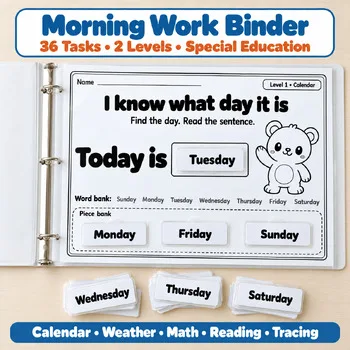
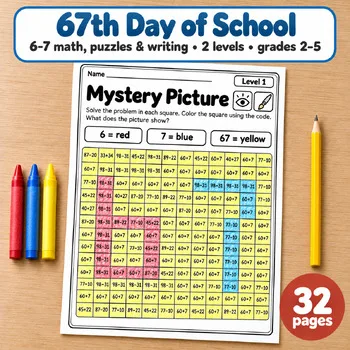
These Activity Express printables include coin practice you can pair with the tools above — the morning work binder covers coins alongside other early math skills, and the 67th day activities include coins among their review skills.
Frequently asked questions
What is the best free money tool for elementary school?
Practical Money Skills is the strongest free starting point, with ready lesson plans for PreK–6. EVERFI and Banzai are the next two to try.
Can I teach financial literacy without a budget?
Yes. Seven of the nine tools here cost schools nothing: Practical Money Skills, EVERFI, Banzai, Junior Achievement, Money as You Grow, Bankaroo's free version, and the Stock Market Game at no or low cost.
What age should kids start learning about money?
Money as You Grow starts at age 3 with money milestones and activities. Bankaroo is designed for ages 5–14, Banzai's elementary course is for grades 3–7, and the Stock Market Game is for grades 4 and up.
Are Greenlight and Acorns Early classroom tools?
No. Both are paid family subscriptions with a child's debit card, so they fit a recommendation to parents. Greenlight starts at $5.99 a month and Acorns Early at $8 a month.
Which tool teaches investing to upper elementary students?
The Stock Market Game, for grades 4–12, lets teams invest a virtual $100,000 in real stocks, bonds, and mutual funds. Greenlight and Acorns Early also offer investing for kids, but only on their paid family plans.
Make a tool for teachers?
Built something teachers love? We keep these guides fresh, so send us a new tool, updated pricing or a featured spot request.
Request a listingDisclosure: no tool on this page paid to be included and we don't earn commissions from these links. Featured placements, if we ever offer them, will be clearly labeled "Sponsored". Details were checked on each provider's official website on November 3, 2026 and can change.